#7 - Art of Making Meaningful Decisions
Introduction
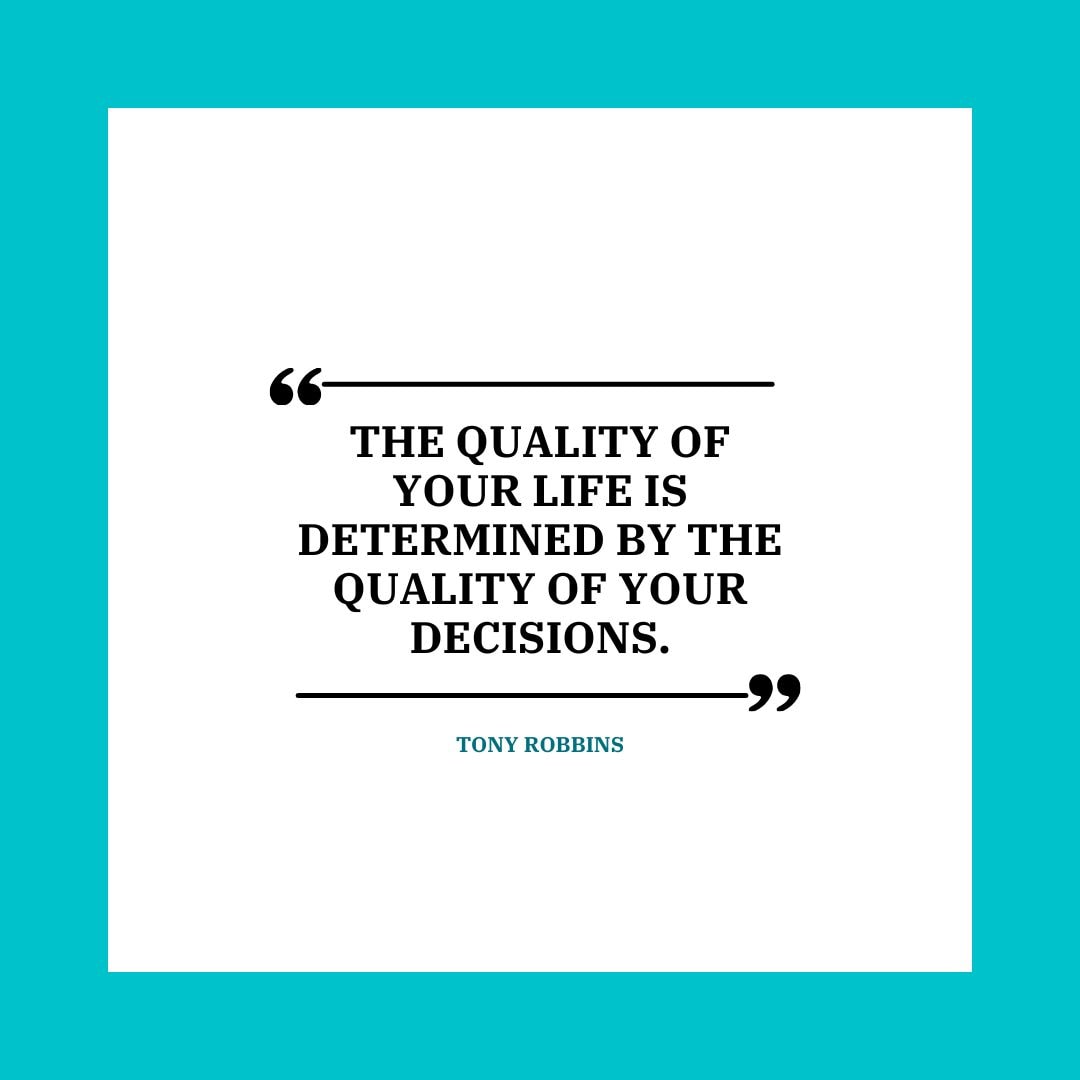
Why do some people seem to navigate life's complexities with grace and success, making choices that propel them forward, while others struggle? The answer often lies in the art of making decisions—a crucial skill that significantly influences our well-being and achievements. Mastering decision-making isn’t just about choosing wisely between options; it's about understanding ourselves, managing our emotions, and deliberately shaping our futures.
This article offers insights into practical habits that enhance decision-making skills. It guides you through understanding how clear, purposeful choices based on personal values can transform your life. You'll learn to handle challenges with confidence and make decisions that truly reflect your deepest intentions.
Whether you aim to improve your personal relationships, advance your career, or simply live a more content life, refining your decision-making skills is essential. Embark on this journey to empower yourself and create a life aligned with your true aspirations.
How to Make a Good Decision?
Decisions must go in line with your goals. We don’t want to make decisions that would contradict our current focus, but also we need to balance it and let some things happen to us. I have a mind program "Whatever happens, happens for good", it works pretty well, and it let me not be stuck in the past.
We all should learn to make “small” but very valuable decisions. Each moment we are at is the result of our decisions, and we are facing consequences, here and now. You might get this illusion that one decision is more important than another. As a matter of fact, in every second of life, the decision-making process is actually happening. Hopefully, the decision would be conscious enough so we can actually choose what is best at this moment based on past experiences. So don't look too far for things to improve.
Often we are not conscious enough and we experience side effects of our decision. However, there is an administrator mode within you. Which if is recognized, access will be granted to you. You will be able to get into the inner observer, whichis connected to the peace of mind and as you will grow a stronger connection, it will reward you with a clear (less cloudy) perspective on external as well as internal movements.
Follow these rules to give yourself a chance of receiving access:
Turn off all distractions around you.
Take a deep slow breath in and out.
Keep your eyes wide open.
Slow down all your movements and be aware of each of them.
Observe surroundings, slowly moving your sight from one point to another.
Experience this current moment as it is.
Reminder
No matter what choices you made in past - they are in the past. It’s more important to focus on what you do right now, in this very moment. Avoid the trap of getting to unnecessary reminiscing and desperately trying to change the past. Free yourself from this burden and live a wonderful life.
When to Make a Decision?
The “time” before you decide is essential, and only then you will be able to make the best possible choice. It's important to understand your current emotional state of being before making any movement. It is a core that will lead quality of your thoughts, therefore the quality of decisions.
If you make decisions based on any strong emotional feeling, there is a high chance that your vision could be blurry. It's connected not only to "negative" expressions but also "positive" ones.
The best way to illustrate it are the moments where we behave angrily. We usually act recklessly and then regret our doings. Same when you feel very happy, then often it's a bad time to promise anything as we tend to be more optimistic and we cannot make a proper smart judgment. Same with being hopeful, and wasting all your money playing slots, or frustratedly getting drunk afterward. It's amazing to experience emotions, but they are bad advisors if it comes to smart choices.
Master of sales and our bosses tend to apply many manipulative techniques which will lead you to extreme emotions. Don't let yourself make decisions under stress or any strong emotions. Often you won't do things that you fully accept within.
Learn to be assertive (matter of practice).
Take a deep breath in and out.
Slow down all your outer and inner movements.
Get access to an observer space.
You can imagine that you are an actor, something like a 3rd person perspective.
Express what you feel towards this person in a calm and positive way, without being aggressive, nor passively accepting 'wrong'.
Let them know that you need time and space to make a wise decision, otherwise there will be a chance of poor results and it will not be satisfying for any of the sides.
It can be quite challenging and quite stressful at the beginning, but the more you love yourself and discover what you want to experience, you will be able to make more precise choices. Let yourself get to know you more. Accept that, it will require time and change of autopilot responses which learned for a very long time.
It's not you if it's something that you can observe - these are mind programs. You have the power to transform them, thanks to continuous behaving in a different way than you used to.
Behind the Scenes
One important factor for decision-making is intuition. It can be sometimes wrong and sometimes right. Intuition is an automatic process so-called "behind the scenes" of the conscious mind. The more we experience in our life, the more powerful intuition gets. Trained intuition works best in situations that are repetitive where you are able to collect all the informations in a systematic way. Facts always go first and then you make a decision based on your intuitive feeling.
It's possible to make good decisions even when we have a half-awaken mind. We all should thrive to develop positive virtues, and let them become our true nature. Even when, not in observer mode, we make automatic decisions that lead us to a reality full of love. We all have this inner feeling or inner voice (it really speaks) when we act with connection to inner values. You can find those types of virtues in most complex philosophies and religions.
Some of the essential virtues: (don't just scan through, feel each one of them by imagining yourself in a situation when having this virtue)
Wisdom and Knowledge: creativity, curiosity, open-mindedness, love of learning, perspective, innovation, good judgment, how to act in a balanced way, understanding.
Justice: respect towards others, self-respect, honesty, responsibility, tolerance, sense of right/wrong, fairness, leadership.
Fortitude: doing right in face of difficulty, inner toughness, ability to overcome hardship, defeats, inconvenience, and pain, courage, resilience, patience, perseverance, endurance, healthy self-confidence, self-discipline.
Self-control: temperance, controlled temper, regulate our sensual appetites and passions, pursue even legitimate pleasures in moderation, power to resist temptation, it enables a delay gratification, patience, calm.
Love: willingness to sacrifice for sake of another, empathy, compassion, kindness, generosity, service, loyalty, forgiveness, social intelligence, "love your neighbor as yourself", mercy.
Gratitude: being thankful for everyday blessings, being able to enjoy small things in life.
Humility: being able to admit our imperfections, ability to act without expecting applause, lack of unhealthy pride, enables us to take responsibility for our faults and failings, apologizing for them, and make amends.
Positive attitude: healthy hope, enthusiasm, flexibility, sense of humor, joy.
Hard work: includes initiative, diligence, goal-setting, resourcefulness, ambition.
Integrity: being faithful to moral conscience, keeping our word, standing up to what we believe, staying consistent in what we do and what we say, telling the truth to oneself, truthfulness, honesty.
Transcendence: appreciation of beauty and excellence, spirituality, feeling of unity.
How to strengthen positive virtues in our life:
Which of those virtues are your strong side? - Highlight those.
Which ones are challenging for you? - Highlight those.
Study, contemplate, and try to memorize them, especially those which are challenging. It takes a long time to truly apply them to life, but it's doable.
Find a balance in those virtues.
Analyze your past decisions, check if they were connected to those virtues.
Learn to listen to an inner voice. - One of the great ways to strengthen this connection is to give this space regular attention. Be aware of its existence. It speaks through inner feelings, images and thoughts. Try to apply its guidance to everyday life. You can talk to this voice the same as you would talk to your friend asking for advice. It might be weird for the beginning and answers might not be accurate, but the more you practice responses become sharper, direct, and precise.
Cause and Effect
What is the core of your decision? Is it fear, anger, hope, or expectation? Or is it a feeling of being enough, love, or happiness? It is like choosing a seed that you are going to grow for a long time. So choose wisely. Our true motives should always be based inward not outward.
You have to listen to what do you feel acting on, or deciding from within, like:
Am I feeling good taking one path over another?
Am I feeling good by doing so and so?
Is it connected to my inner values and reasons?
We all look for decisions supported by reasons created by us. Everything will be clearer if you find true reasons behind all of the decisions, and how strongly agree with and support them.
Our bodies, as well as the universe, is in constant movement. There isn't anything like not making any choice. We are actually enslaved to a constant change, as it's the nature of the present universe. I mean - by not making a decision you are making the decision. It is considered as a decision when you decide not to make a decision, or not to act on it. It also will lead to conforming consequences. Anything has consequences, that's how it works in this realm which is called cause and effect. What we can't see doesn't mean it doesn't exist. There are myriad of small processes going on in your brain whenever you make or not make a decision.
Often it happens that you allow somebody else to make decisions for you. There are many possible reasons behind it. What are yours? Does it have a positive core? It might seem like an easy way to cope with what might be coming as the consequences. But a decision still remains a decision, done fact, and it will cause consequences whether positive or negative. There isn't any way to avoid taking part in this whole game of decision-making.
Good Decisions
Other things that will increase the chance of making a good decision - are to gather as much data as you can and to make sure data is completed and doesn’t include false information. We need to make sure that we know the full context.
Make sure to gather information carefully, to not get into the trap of confirmation bias. A confirmation trap is a tendency when you deliberately search for evidence of what you expect or think of, so it confirms or supports prior beliefs or values. It often leads to ignoring contrary information. This can be managed by education and training of critical thinking skills.
How to learn to think critically:
Create the habit of thinking critically
Debate and question everything, especially your own decisions
Practice claim-evidence reasoning
Look for logical connections between ideas
Solve problems systematically
Remember everything has two sides. You should always look through both and then make a conclusion, not only one side that you'll find to be truthful. Don't ignore ones that do not support your idea. Find enough information, make sure to balance it to not get into another trap.
Another thing worth considering is to accept the fact, that making just good enough decisions are okay, as you can’t really predict all of the outcomes. Otherwise, it can lead to overthinking and over-planning, leading you to not make any decision which is also a decision. It can lead to procrastination which is also a decision, which happens mostly due to blocking a free flow of energy.
It’s also important to contemplate how an idea you are considering could end in failure. You need to balance that as well, since failure is not the end, instead, it might be the beginning of something completely unexpected.
Decision and Risks
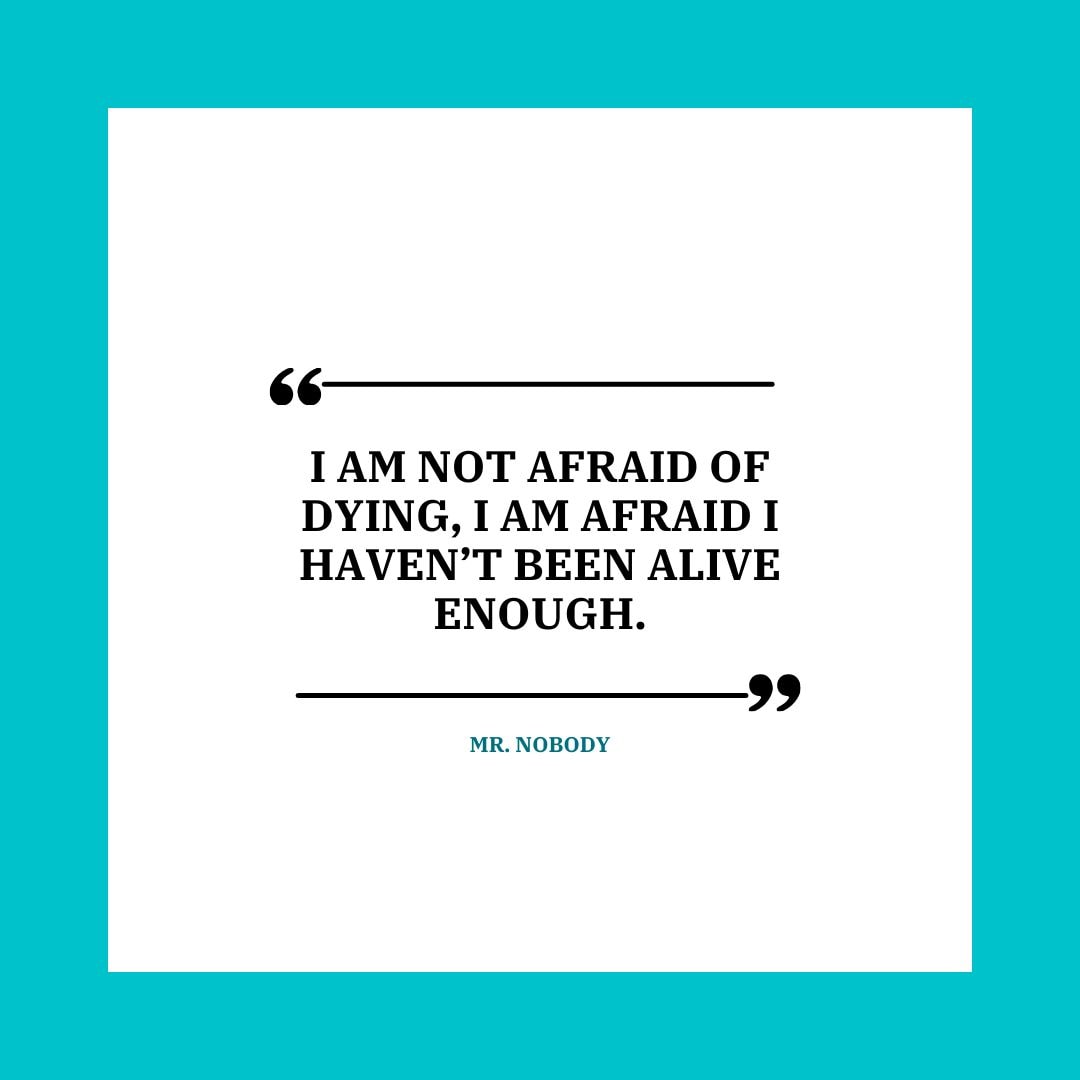
The most common regret (especially in older age) is that people were afraid to do something they deeply wanted. No matter what happens to us, good or bad - it's never going to be forever. Everything passes, this is the nature of this universe.
People worry about doing wrong things and obsess over inconsequential details.
If you have a goal, let's say to reach the point of financial freedom and you don’t know where to go and what to do. You have two options, decide not to make any movement or decide to do any movement. It's quite simple to evaluate which option gives you more chance of success. Even a chaotic movement is better than not taking action at all. As it will give you some chance of success whereas without any action (which is an action) your mission is a failure from the beginning. Let it go and experience life as a journey. It’s easier to make changes/improvements in life once you are moving. "How can I make it better?" - such a question is pretty handy.
There is a saying "You don't get into big successes without taking unreasonable risks." It makes a lot of sense if we look at the history of investors who turned relatively small amounts of money into fortunes.
It's funny when people who don't know much about the field are the most talkative ones and ready to give 'good' advice. Some people would tell you to not do it, and not take a risk. (due to their mind programs). Is it reasonable to accept advice from someone who has never been where you want to get?
Most successful people tend to be responsible for their successes as they don’t follow the seemingly good advice they're given. But this is a matter of statistics and in many cases, good advice is useful to listen to (but from the right people).
However, no matter who gave you advice, the decision-maker is still you. You are the one to decide whatever you would do with your life. You are the one responsible for the choices you make whether it leads you up or down.
But to get there where you want to be, you need to make a lot of decisions, to become the YES man (there is a movie starring Jim Carrey with the same title), to try new things, and learn from both positive and unpleasant experience. It will help you get out of your comfort zone and this is where the magic happens.
To get there you need to take an ACTION.
Small but Important
Small decisions make a huge impact. Especially if they are repetitive and concern about the same cause. That's why we want to create strong habits because if you repeat something over and over again is like filling your cup with few drops each day and the day comes where your small drops turn into a healthy complete cup of positivity (or negativity).
Take yourself out of the situation - try to observe yourself from 3rd person perspective, or imagine you are giving advice to your best friend. Follow your own good advice (and apply it into habits), become your own best friend who helps you improve, holds you when you fail, and motivates you to move on for the betterment.
Once you will align with your core of being, you will find yourself at the right time and at the right moment. The whole course is created to truly understand who you are and who you are not, and to bring you closer to your goal each day. It’s like the universe is assisting you during the process, and things will get clearer with time and practice.
Cold-Minded Calculation
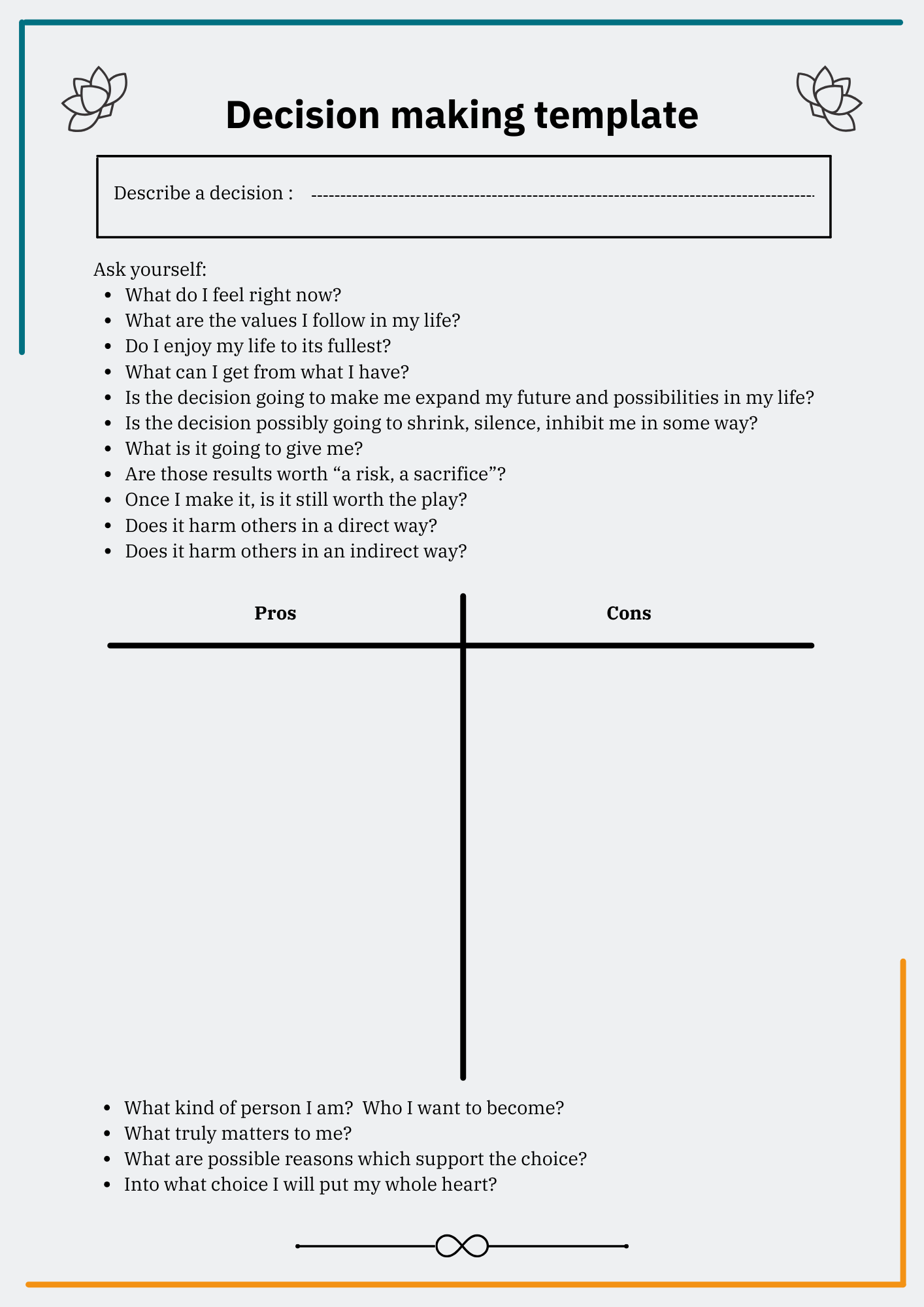
If you feel stagnation, or life is simply boring? Consider changing your surroundings, get a new job, meet new people, find a new place, open up for new opportunities. It's like getting a new deck of cards, whereas you used all cards before. For many being open to the unknown might be frightening. This illusion of safety is quite common. You have only one life as you are. Is it really worth to have a boring life? You will feel much more alive if let life surprise you! If you don't know if the decision will potentially bring positive results, then run a cold calculation. (You can use the template on the next page).
Look at it like this: by choosing what to have for breakfast, healthy balanced salad, or sugary donuts. Which one will bring more love towards you? Which one will give you chance to live longer? If you don't know, or not sure, then take your time to do research and read about it, then find an optimal solution to suit you.
What are other alternatives?
One alternative can be better, equal, or worse than another.
Easy choice where one alternative is clear, better than other like what to eat (if we know our reasons behind it, what matters for us more).
The hard choice is where one alternative is better in some ways and another alternative in some other ways. Neither is better than the other overall. It will lead you to the conclusion that one alternative isn’t better than another.
For example, if you have two equally good options to choose from, you might decide to try both of them for some period of time. Maybe you will decide to go part-time on one, and part-time on the other to really engage and feel what works best for you. Often the best way is to try and experience it on yourself.
Often people choose the safest option, but it doesn't always feel right from the inside. You can recognize that something is not right and make a decision to change it, but often you need to experience it to find out.
Be creative, find the way, contemplate, take your time and take an action.
Life is a School
Treat life like a playground, play, and try things, to get to know you better. Treat every decision and consequence like life school as indeed it is. Learn from this experience. You can review all of your previous actions and unpleasant experiences. Let yourself look at them objectively and don't get into emotions. As what happened - happened, it doesn’t matter anymore. It will have meaning if you are going to feed it with your emotions.
Once you will fulfil yourself with wisdom (based on the amount of knowledge you got from past experiences), it will be easier to make better decisions. But it’s impossible to learn if you are not taking any chances to analyze and draw conclusions.
Discover this inner child within you. Remind yourself how many times a small child will fall until he will learn to walk. Failures are only here to make us stronger, they are to let us learn.
Growing Consciousnesses
Once you will become more awaken-conscious, you will be able to make more conscious decisions.
Contemplate this:
"Whenever you want to do a bodily action, you should reflect on it: this bodily action I want to do, would it lead to self-affliction, to the affliction of others, or to both? Would it be an unskillful bodily action with painful consequences, painful results? If on reflection, you know that it would lead to self-affliction, to the affliction of others, or to both, then it would be an unskillful bodily action with painful consequences, painful results, then any bodily action of that sort is absolutely unfit for you to do. But if on reflection you know that it would not cause affliction, it would be a skillful bodily action with pleasant consequences, pleasant results, then any bodily action of that sort is fit for you to do" ~ Buddha to his young son Rahula.
Watch my favorite movie:
"Mr. Nobody" by director Jaco Von Dormael. Not many people like this piece of art as this movie is difficult, or it simply doesn't resonate with them. It responds to many questions. First, answer them by yourself and then watch the movie.
How would your life change if you knew all the possible outcomes from all possible realities?
What if there won’t be fear of the unknown?
Will you be able to make a choice if you could see all possibilities?
What is a meaningful choice for you?
“We cannot go back - that’s why it's hard to choose” ~ Neo, Mr.Nobody movie.
It's good to remind yourself about the core of a decision. Through self-observation I noticed that if a decision is based on positive, calming inner feelings, based on love and "having enough", then usual, potentially unknown consequences have the same charge majorly. That's the way: make potential unknown - practically known.
Conclusion
All decisions should be to bring more love to your and other people's lives. It's also important to recognize which people are toxic and egoistic as they shouldn't be taken into account.
It’s good to understand that there isn’t anything like right path or wrong path. “Every path is the right path. Everything could’ve been anything else and it would have just as much meaning”. ~ "Mr. Nobody" the movie quote.
Life is full of contrasting experiences, even though we will think that we choose the right path, it might lead us to experience sorrow, sadness. That’s why we all should learn to react to external situations by always finding this inner observer. The one who has the ability to choose to let this emotion take over us, or not.
You now understand the cause and effect program more, and why you need to be more conscious about your decisions. There's nothing that will leave no traces, maybe you would think that one piece of candy doesn't change anything but it does. It does a lot more than it seems, just like every little decision you make, it will have an outcome, even if you decide nothing it will surely lead to some result.
To feel on an intuitive level when and where you should be, and to do what, you need to remain in a calm state of mind and never decide based on emotions. Sometimes it's worth risking, as well as not risking in some cases.
Considering consequences, paying attention to your motives when making a decision, and of course by trying to keep conscious about the little things you do. That's why you start the transformation by changing your habits from the second you realize it.
Exercise for This Week
Be more conscious of everyday decisions you make, especially those small unconscious ones. Like nail-biting, walking, the way you sit, and what you do with your hands.
During the day, realize how many necessary and unnecessary decisions, movements with your body you actually do each day. You might find this exercise quite demanding, as a matter of fact, it is difficult to be conscious for the whole day from morning to evening, for 7 days straight. You can create sticky notes, write down "be aware" on your palms, set up frequent reminders on your phone.
It’s much easier to do this exercise, when you slow down, with everything that you do. Slow down your speech, slow down your movement, slow down your walk pace, slow down your breath, basically everything. Make a habit of getting into observer space.
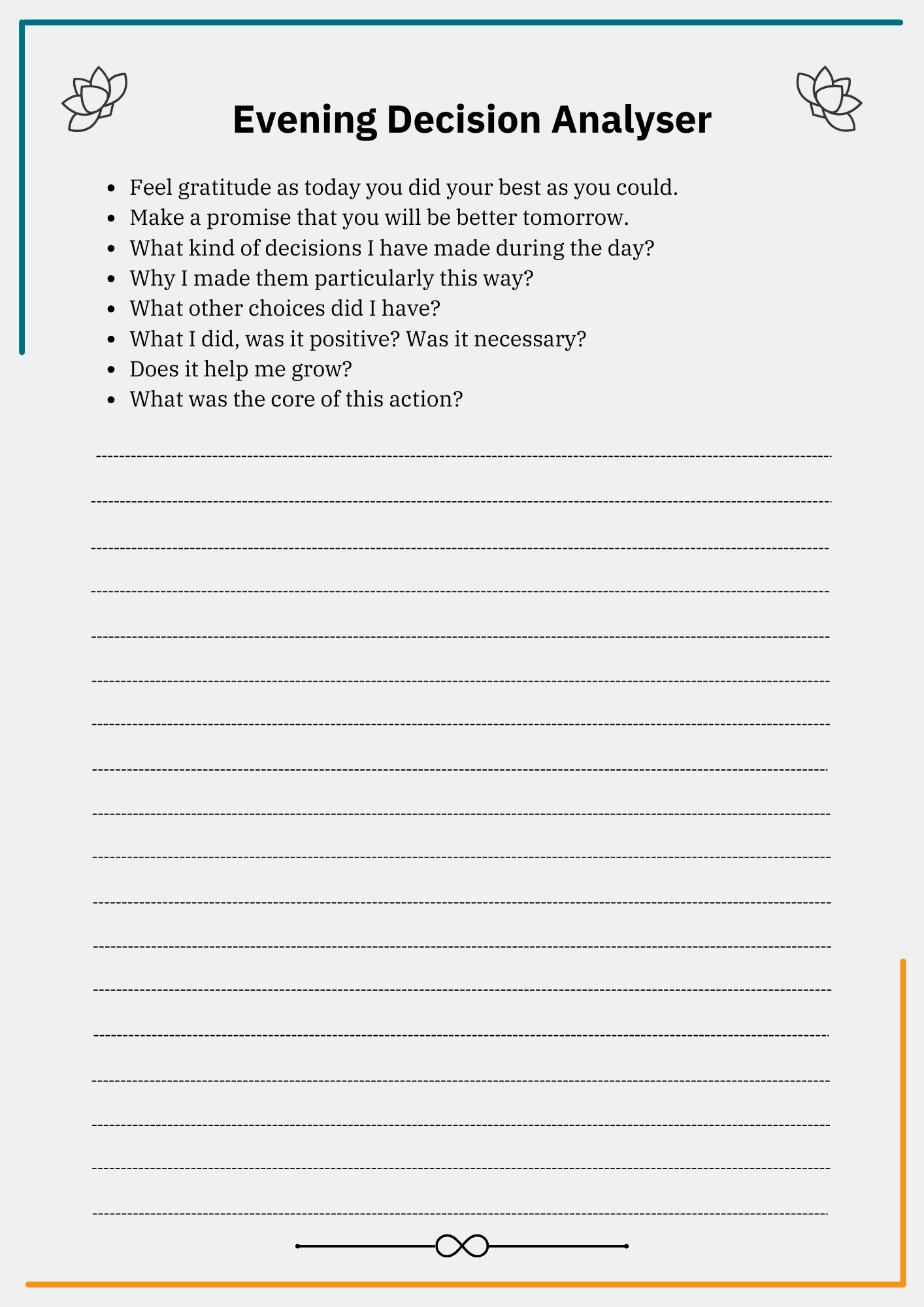
Each evening before going to sleep, thank yourself for this day, that you have action taken, and promise yourself to be better the next day. What kind of decisions I make during the day, and why? What other choices do I have? Ask yourself, what I do is actually positive? Is it necessary? Does it help me and others grow? Why I actually do it? What was the core of this action? Remember what is done - it's done, get the knowledge from it, and move forward.
Bonus 1.
Do research about positive virtues (there are much more than it was mentioned in this week), contemplate, and try to memorize them. You can print a list and highlight those which you think you might want to concisely develop. Make sure to incorporate this into habits, and act always as the best version of yourself.
Bonus 2.
Read more about critical thinking. Make a habit of this type of thinking. Learn to ask WHY.
Exercises from the starter:
Get into the habit of doing all exercises, answering questions out loud, contemplating. If homework on the last page of each week doesn't include processes mentioned in the content, it doesn't mean you can skip them, or they are less important! Some of them can be even incorporated as a daily routine. This course is not to only scan the text through, and believe that changes will come by themselves, but it requires an active engagement and focus from you! Make sure to engage fully in the course.
Remember about it as this is most likely the last time I mention it.

MySpiritWay Practical Spirituality. We can help you; create a supportive lifestyle,accelerate spiritual and personal growth, reduce life suffering, raise your consciousness, and achieve life satisfaction across all fields.
Simplified Practical Spirituality
Everything you need to know about practical spirituality and the evolution of consciousness.
Get Access here
MySpiritWay © www.myspiritway.org