#68 - Healthy Smile
Introduction
Who would have thought that we will cover oral hygiene in this course. Unhealthy teeth might stop us from smiling at other people, which limits our confidence and decrease our happiness. I am not a dentist, but there are some simple ways to implement to make our natural beauty last for a longer time.
"Oral hygiene is the practice of keeping one's mouth clean, and free of disease and other problems (e.g. bad breath) by regularly brushing the teeth (dental hygiene) and cleaning between the teeth."
It is an important part of your overall health and well-being. It's good to get in habit of this lifelong commitment as nearly 100% of adults have/had at least one dental cavity.
We will talk about oil pulling which is one of the old ways to take care of voice and boost oral health. Brushing, flossing will be also a part of this topic. We will also talk if fluoride is good for our health and teeth.
Teeth and inner organs
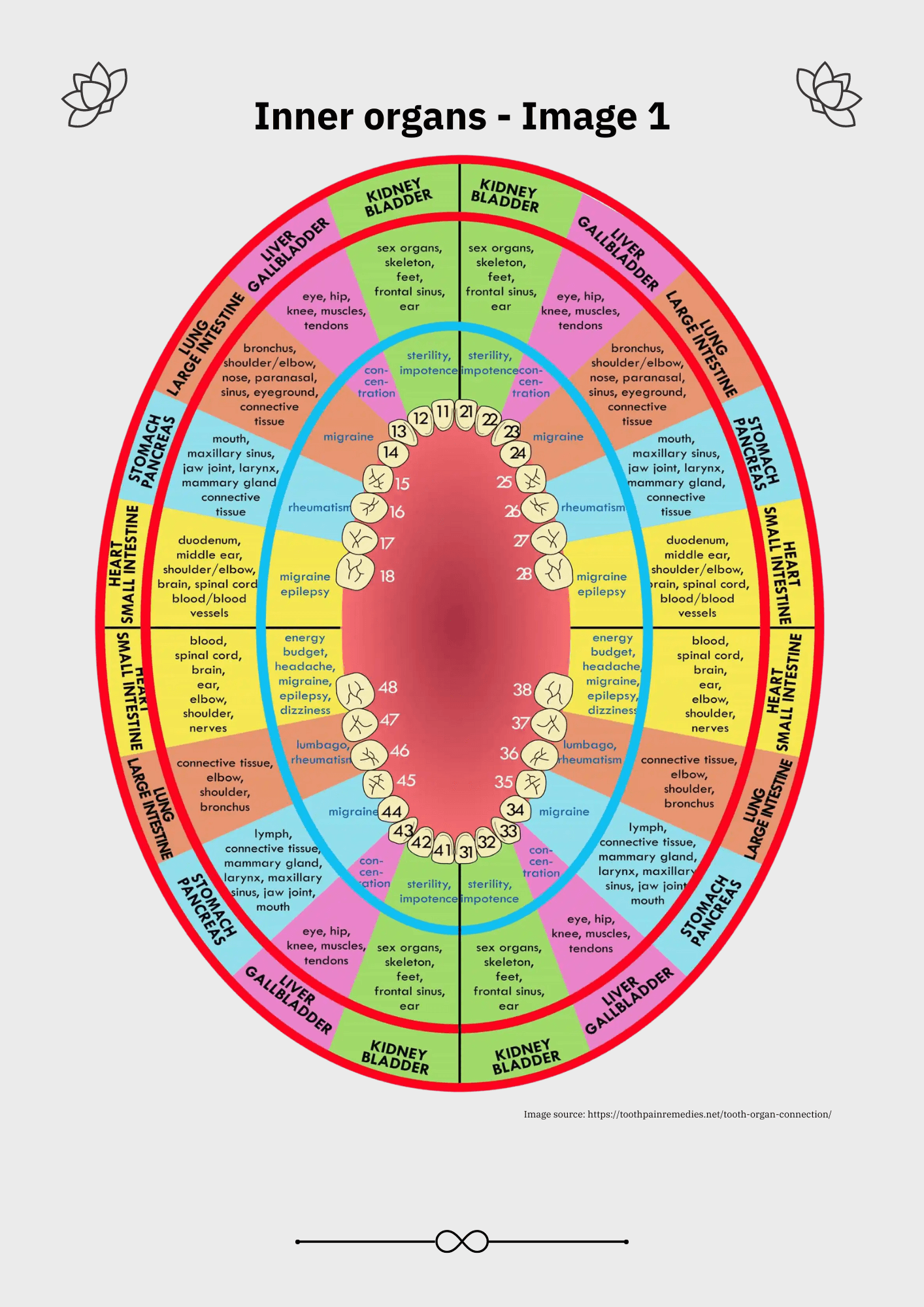
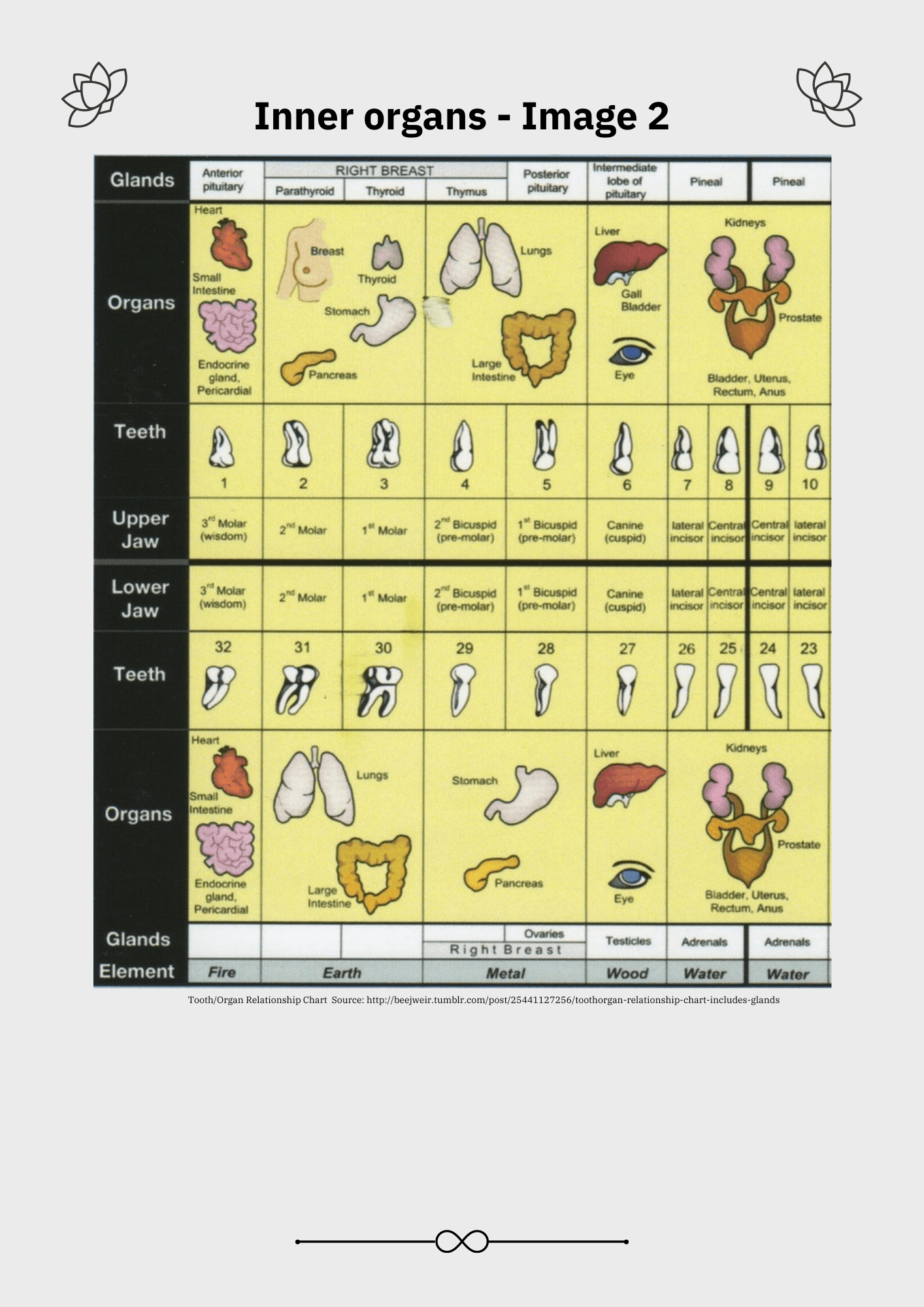
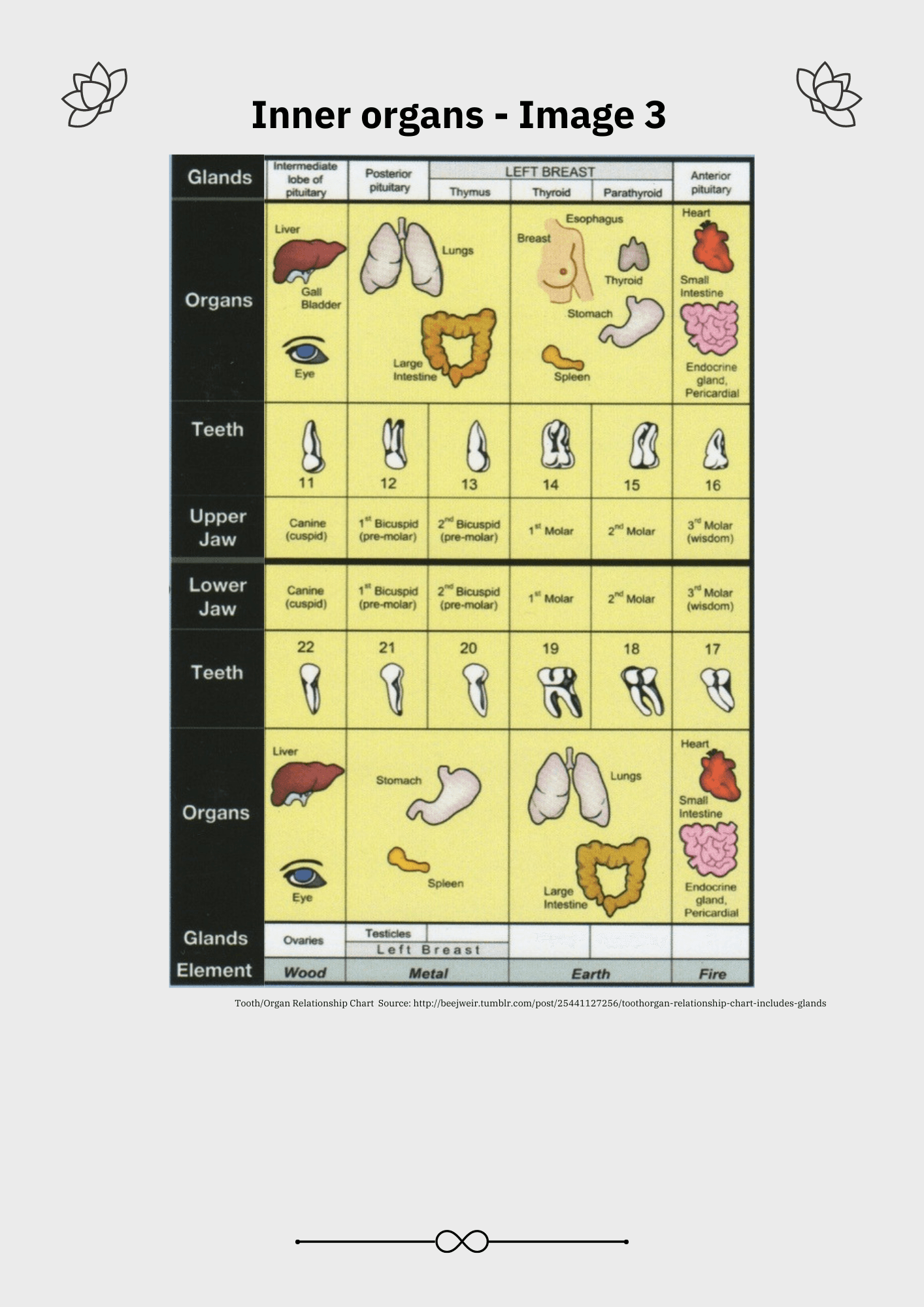
The holistic medicine approach also, as you might guess, applies to teeth. When you look at your teeth and gums, think about the big picture. Connection of what is going on in your mouth can be related to overall health. There are so-called holistic dentists who study this phenomenon and are able to find connections between infections in patients' teeth and a variety of other health issues.
The idea derives from Reflexotherapy which involves an alternative medical practice with the application of pressure points on the feet and hands. We are not going to massage our gums, rather I would like to interest you, that according to charts whole maps of organs can be found on feet and hands. Reflexology also shows that the inner organs are depicted on the ears, face, scalp, tongue, and teeth. Therefore it's possible to diagnose health thanks to this knowledge.
Below I attached The Tooth-Meridian chart to see how each of your teeth is connected to one of your organs. How can this be used in a practical manner?
First is when one of your teeth has a disease or infection, it can leak toxicities into the bloodstream.
The second, more energy-based is that infected teeth affect the energy flow in meridians. You already know that when energy is disrupted it affects the whole system - physical and emotional. It works both ways. The blockage might start with an infected tooth. So it can be used as holistic health diagnose.
Brushing
"Brush your teeth twice a day, for at least two minutes" that's common advice of many dental specialists.
When you brush correctly, you eliminate plaque buildup and bacteria. This can prevent gum disease and tooth decay and generally promote a healthier lifestyle.
How to brush teeth with a standard manual toothbrush:
Lubricate the brush with a small amount of water.
Spread a small amount of toothpaste on your toothbrush - about the size of a pea on the head of the toothbrush.
Put the toothbrush into your mouth at about a 45-degree angle to your gums and use gentle, short circulars strokes to brush the front of your teeth. Then proceed to both upper front teeth and bottom.
Brush the outside surfaces of teeth, get the back molars and upper areas.
Flip the toothbrush upside down to get the inside surface of the top front and bottom front teeth.
Brush your tongue, and soft palate to get rid of any bacteria or plaque buildup.
Spit out the remnants.
Rinse your mouth with cold water.
How to brush teeth with an electric toothbrush:
Lubricate the brush with a small amount of water.
Spread a small amount of toothpaste on your toothbrush - about the size of a pea on the head of the toothbrush.
The electric toothbrush is almost the same as a regular toothbrush, so you basically do the same 45 degree maneuvers, skipping the circulating motion. Start at the back bottom.
Move slowly and gently from one tooth to another, making it one at a time. Brush making kind of an arc motion from the inner side to outer of a teeth, rotating a brush.
Do the same with the upper row. Rotating motion and buffing one tooth at a time, reverse arc.
Very lightly move to the tongue surface once you finish electric toothbrushing all your teeth.
Then rinse your mouth thoroughly with a cold water to get the remaining paste, saliva and others out.
How to brush teeth with and spacers:
To brush teeth with spacers, do it as you would normally do with one exception. Instead of up-and-down movement go for the back-and-forth. This will help to keep spacers in place. Make sure to check afterward that all the spacers are where your dentist placed them.
Advice on how to brush your teeth with braces would be instructed to you by the orthodontist who placed them.
But here are the general points on cleaning teeth with braces.
All rubber bands and removable parts must be taken out and rinsed, as you would reapply them.
Squeeze a pea-size toothpaste on your toothbrush.
Start brushing your teeth with extra caution, well and gently around the pins and wires of the braces.
There might be bacteria buildup or plugs forming from food remains, so make sure you brush carefully your braces.
Even with braces, you could brush your teeth normally up-down, and side to side. Make sure you take time brushing well. Brush your tongue as well.
Rinse.
How to brush after wisdom teeth removal:
Generally, if this tooth is in healthy condition and doesn't cause clogging of others' teeth there is no need to remove it. However, if you had to remove it, put extra precautions when brushing.
Don't use toothpaste in the first few days after tooth removal. Clean, cool water will do it.
Brush carefully as you normally would. With one exception, don't brush over the site where your tooth was removed. This area needs some time to completely recover, and additional stoking might cause an opening wound.
Rather don't rinse on the first day of surgery. The next days be extra mindful and do it gently with cold water.
How to brush your children's teeth:
It's not recommended to use fluoride toothpaste under the age of 3. Due to the fact that teeth can start decaying just after they emerge from the gum line. It's in your duty to teach them good habits. With time show them how to properly take care of oral health.
Chose a child-size toothbrush and spread a very little bit of toothbrush. Rice grain amount for children under 3 years old, or pea-sized if above 3 years old.
Slowly and gently brush as you would brush your teeth. Remember to go for the areas where teeth have not popped out yet.
Remember about the tongue. Let them practice rinsing their mouth and spiting their toothpaste.
Generally, if you imagine a 3D model of your mouth, remember to cover all possible angles with your toothbrush. It might be helpful for you to search for some youtube videos to improve the quality of this procedure. "Okay, I do it this way" "How can I do it better?"
Pick the right brush
One of the most important factors when it comes to get out the most from the brushing is the proper toothbrush. To be honest, almost any toothbrush, if you feel comfortable and have proper cleaning technique.
The number one rule is to find a toothbrush that is able to reach everywhere. Both manual and power work pretty well if that simple rule is covered.
Many dentists suggested soft bristles. It is not necessarily true that harder bristles clean better. The hard ones actually wear down your tooth structure and may cause gum tissue to pull back. Bleeding much often occurs when brushing with hard bristles.
Choose head size right, especially if you have a smaller mouth, go for a smaller head.
Electric or manual?
There is a misconception that an electric toothbrush cleans better. When in reality a matter of a proper technique, and both can be effective or not. However, if that motivates and satisfies you to reach the full 2 minutes of cleaning - go for an electric one. For people who need support for example people with arthritis, this solution might be desirable. Also for people who tend to brush too vigorously as it let them slow down.
Remember to replace the toothbrush regularly, every 3-4 months, just when bristles begin to look worn. That's why it's important that you would take care of more ecological materials, to prevent creating additional plastic pollution. Be conscious about the brush type you would use and recycle.
Flossing
Floss teeth at least once a day will help reaching places between your teeth where a brush can't reach. It lets you prevent gum disease.
Do you need to floss? Definitely, as cavity can also occur between your teeth. It's impossible or very difficult to reach those areas using only a brush.
How to floss?
Wrap around 45 cm of floss around the middle fingers.
Hold a small amount of floss (2-3 cm) between your thumbs and pointing fingers.
Gently insert the floss between the teeth.
Hug floss tight to the side of the tooth.
Rub the floss gently up and down, pressing against each tooth.
Traditional floss is composed almost entirely of petroleum-based plastic and nylon. It's all about millions of kilometres of floss being produced each year. It has a terrible environmental impact as many sea animals being strangulated by plastic. Add to this toxic substance like PFASs and PFCs which impact health. That's why when you decide to add flossing to your daily routine consider a zero-waste floss alternative. Look for bamboo fiber with activated charcoal, corn-fiber, plastic-free with compostable refill baggies, candelilla wax, peace silk. There are many options to choose from. Cruelty-free, vegan, non-toxic, use zero-waste packages are some signs which you should pay attention to.
Consider using alternative products to clean between your teeth.
Soft wooden sticks
Cone-shaped brushes
Mouthwash
Mouthwash also called oral rinse, it's a liquid used to rinse teeth, gums, and mouth. It contains antiseptics to kill harmful bacterias, increasing oral hygiene. It can be used to fight against bacterias that are causing bad breath and to prevent tooth decay.
Remember it's a part or whole oral hygiene, as one of the steps and it shouldn't replace brushing nor flossing.
There is also a lot of controversy about mouthwashes (same as with fluoride), where some suggest that due to the high containment of alcohol and fluoride it kills not only "bad" bacterias but also "good" ones which are part of the mouth microbiome and its ability to fight cavities, gingivitis, and bad breath.
This topic is quite difficult as it has many both supportive and opposite statements.
Different formulas contain different ingredients it's important to choose ones that are actually supportive.
How to use:
Brush and floss teeth.
Use provided cup to measure enough amount of mouthwash (3-5 teaspoons).
Empty cup into your mouth and deliberately swish it around. Don't swallow it. Rinse and gargle for 30 seconds.
Spit it out.
How often to use it? General recommendations are twice per day.
Generally, it is not necessary to use mouthwash to keep your mouth clean.
If a special mouthwash is prescribed by a dentist as you might have periodontal surgery, you should follow the instructions of your dentist.
Instead of typical mouthwash, you can switch to the alternative which is oil pulling.
You can find other more natural products which are alcohol-free, SLS-free, fluoride-free, and any other "free" options. In a SPA day, if you remember and keep up, there is also mentioned an old but effective mouthwash like a water with salt. Fully natural, a water and a pinch of a salt. It can help remove bacteria and stones, as well as cleaning the throat when you gargle, helping with sore throat symptoms.
Oil pulling
It's interesting as many people positively speak about the benefits of oil pulling especially when it comes to the strength and power of the voice. When you are singing, teaching, or generally rely upon your own voice you will be amazed by the results.
After research I found also other potential benefits:
helps strengthen and stabilize your jaw and teeth;
reduces gum inflammation;
decreases nausea;
prevents and counteracts tooth sensitivity;
stimulates your taste buds;
prevents dryness of throat and lips (including cracking of lips);
Oil pulling is becoming more popular especially in self-conscious communities. This practice has origins in ancient wisdom traditions.
Sesame oil is the preferred one. Also, many online sources recommend coconut oil, but its heaviness, sweetness, and cooling qualities make it difficult for your mouth to absorb the full benefits of this practice.
The best time to do oil pulling is on an empty stomach, before breakfast. Professional singers, speakers, and teachers can do this again at night for extra voice protection.
How:
Brush your teeth with toothpaste.
Scrape your tongue with a copper, silver, or gold tongue scraper. This practice ensures your mouth remains toxin, odor, cavity, and infection-free. It's not obligatory, this is how it's done according to the ayurvedic recommendations.
Place 1 or 2 teaspoons of sesame oil into your mouth. Swish the oil around your teeth and mouth, ideally for up to 3 minutes, then spit it out.
Swish around a small amount of water, then spit it out.
Fluoride
This topic is full of mysteries, but what is truth? I had to talk to dentists and did research about this topic to make sure that I have the right understanding of this topic.
Please don't take this information as a grant, as there is so much opposing information, and without a chemical and biological background, it's impossible to provide you 100% of accuracy. I did my best and based on different sources I leave my statement about this.
Dentist perspective on what fluoride does:
Enamel is dense and strong, but when is affected by acid, the tooth gets removal from this material. What actually happens is you replace hydroxyapatite with fluorapatite. When your toothbrush (approx 2 min), and if there are some areas that slowly demineralize, or turning into the cavity, the fluoride is able to remineralize these places.
Fluorosis:
Overexposure to fluoride during the first eight years of life can lead to that cosmetic condition. This is the time when the most permanent teeth are being formed. In its mildest form, dental fluorosis appears as very fine pearly white lines or flecking on the surface of the teeth. Severe fluorosis may lead to the enamel being pitted and discolored.
What else can prevent the cavity?
Don't buy high-in added sugar food and drinks.
Eliminate highly processed food in your diet.
Unanswered questions:
(there are researchers, but it's suggested that they are not as extensive to answer the statements clearly)
If fluoridation and fluoride in water should prevent teeth from cavity, why still so many people deal with this problem?
Is fluoride toxic for developing the brain?
It's been said that fluoride is toxic if being swollen in large quantities, how is possible that it's not harmful in low quantities? Natural vs Synthetic:
There are two types of fluoride naturally occurring - calcium fluoride. This one has a neutral charge (due to calcium). It's naturally present in nature as soil, rivers, oceans, food. It occurs naturally in the body.
The fluoride added to tap water (USA) is synthetic, and it's in a form of - sodium fluoride with a negative charge. It's an industrial waste, a byproduct derived from Hydrofluoric acid. Some medical journals reveal that sodium fluoride is a neurotoxin. It doesn't contain calcium and it goes straight to the bloodstream.
Fluoride cumulates in the body, half is eliminated through the kidneys while rest is stored in teeth, bones, blood vessels, and tissues.
"Safe" daily dose of natural fluoride:
It was difficult to find unambiguously clear daily doses as they vary from source to source.
Instead of hard numbers, I attached a list of fluoride sources:
Black tea (brewed with tap water)
Grape juice
Sodas
Shrimp
Table wine
Coffee
Average Municipal (City) Tap Water
Raisins
Potential (the opposition statements) effects of synthetic fluoride:
Lowers IQ
Increased ageing
Increases lead absorption
Arthritis
Dementia
Hyperactivity
Effect immune system
Decreases fertility
And many more...
My statement about this topic?
I am a bit in the middle between hard supporters and opponents. I am a supporter of hard facts. However, nowadays as we live in times of enormous disinformation, manipulation and propaganda it's hard to believe what is true and what is not. Personally, I do use fluoride-free toothpaste most of the time. I don't have problems with the cavity, even if I am not using fluoride paste. I think a low sugar diet makes most of the sense if it comes to dental care.
It's important to notice that if you decide to use fluoride go for a rice-sized amount, opposite to what is on popular commercials programs in our minds. In my opinion, it's important to do further personal research about everyday fluoride (food, water) intake to decide if the "safe" limit is not crossed.
As there are many sources pointing out, it can be toxic for the developing brain. Pregnant women and infants should greatly reduce fluoride ingestion (it goes both for natural and synthetic). If possible, breastfeed the baby, don't use fluoridated water to make the infant formula. Why to take a risk?
Food for healthy teeth
A healthy diet which was introduced at the beginning of the course applies also to oral health. Avoid or limit the amount of processed, acidic, sugary, and high carbohydrates without significant nutritional value. Mushy, processed food and cutting all stuff into tiny pieces doesn't get jaws working.
Did you know that sugar interacts with "bad" bacteria in your mouth to produce acid which slowly dissolves the enamel and that's what leads to cavities?
Focus on food high in fiber with important nutrients like calcium, potassium, phosphorus, vitamin K, C, A, D. Fresh, crunchy veggies and fruits are the best choice for your teeth.
I won't say much about a healthy diet as we have covered this topic already. Eat those carrots and leafy greens, my friend. Cacao nibs are also great to keep good real bacteria in check.
Become good friends with dentists
Usually, regular dental checkups are either free or cost very little. You should get one every six months. Become good friends with your dentist and look forward to every visit.
People who regularly get checkups are less likely to ever deal with serious dental issues that would require invasive treatment.
Even if you are the best tooth cleaner in the world, still professional cleaning is crucial - twice a year. Your dentist will recommend you other treatments in case of other signs of gum disease, infections, or other problems.
Professional cleaning gets rid of any plaque, and also removes tartar. Tartar is one of the reasons for bleeding during brushing.
Your dentist can teach you to properly take care of your oral hygiene, show you how to use floss properly.
Have you set an appointment already?
PS. I know people who live in very expensive countries where dental care cost a lot! The cost of flight and accommodation is lower than treatment in the home country. Crazy!
Children's Dental Care
It's your duty to teach your child a healthy oral hygiene routine and make sure that your child will start seeing a dentist by their first birthday. I wish there would be more responsible and self-conscious parents like you.
Bottle feeding, due to the high content of sugar in most of the baby formulas, might be the culprit for keeping teeth in a good condition. Cavities might be caused by too much sugar left on the teeth after bottle feeding. If it's not genetic, obviously.
Keep that in mind and avoid baby bottle tooth decay, do the following:
Keep regular visits to the dentist office, often ask and validate your knowledge and habits which you teach your child;
Brush with a soft baby toothbrush. You can use only water until it learn not to swallow the toothpaste.
Wean your child off of a bottle as soon as it's not needed anymore.
Some words about fluoride. Many sources suggest that very young children shouldn’t use fluoride toothpaste. Special fluoride-free toothpaste also exists for younger kids if you’re worried about them swallowing the toothpaste. If you feel like do extensive research about it.
Summary
A good friendly dentist will guide you and should answer to the most of the uncertainty if it comes to oral care. Find a good one and stay in a good relationship.
Take care of your teeth:
Brush teeth at least twice a day.
Brush properly, remember about your tongue.
Flossing is as important as brushing, so do it at least once a day.
Consider natural mouthwash, or/and oil pulling.
Rinse teeth with water after every meal.
Decrease sugar intake, instead of go for a diet full of fruits and vegetables.
Regular, at least twice a year checkups.
Avoid tobacco products.
If you have a child, your duty is to teach good oral health (not only) habits.
Remember also about the environmental impact which can be reduced by your conscious purchases.
Additionally, I wanted to remind you about the natural way to whiten your teeth (mentioned in previous months) which is a mixture of baking soda, coconut oil, and salt. Make sure you don't use it often as it might affect your enamel.
I encourage you also to do your own research about fluoride. Question everything, don't take my or any other person's words for granted.

MySpiritWay Practical Spirituality. We can help you; create a supportive lifestyle,accelerate spiritual and personal growth, reduce life suffering, raise your consciousness, and achieve life satisfaction across all fields.
Simplified Practical Spirituality
Everything you need to know about practical spirituality and the evolution of consciousness.
Get Access here
MySpiritWay © www.myspiritway.org