#5 - Beyond Comfort Zone
Introduction
Stepping out of our comfort zone is often easier said than done. The comfort zone, by its very nature, is a safe, familiar place where everything is predictable and manageable. It’s where we feel in control, but it’s also where growth stagnates. To truly evolve, both personally, spiritually, and professionally, we must venture beyond these boundaries and embrace the unknown. This journey, though challenging, is where real transformation occurs.
Understanding the Comfort Zone
The comfort zone is not just a physical space; it’s a mental and emotional state. It’s where we do what we know, follow fixed routines, and avoid risk. In this zone, our mind feels safe because it’s operating within familiar parameters. While this can be beneficial for maintaining stability, it often leads to stagnation, preventing us from exploring new opportunities and realizing our full potential.
The Power of Discomfort
Discomfort is often seen as something to avoid, but it’s actually a powerful catalyst for growth. When we push ourselves into situations that make us uncomfortable, we trigger a state of heightened awareness. This is where learning happens. The discomfort we feel is a sign that we’re stretching our boundaries, challenging our limits, and opening ourselves up to new possibilities.
For example, consider public speaking. For many, the thought of speaking in front of an audience is daunting. Yet, it’s through facing this fear that we develop confidence and improve our communication skills. Each time we step out of our comfort zone, we become more resilient, adaptable, and capable.
Similarly, think about going to the gym. The initial discomfort of lifting weights or pushing through a tough workout can be intimidating, but it’s precisely this discomfort that leads to physical and mental growth. Over time, as you challenge your body, you build strength, endurance, and self-discipline. Each workout stretches your physical limits, and with consistency, you become stronger, both physically and mentally.
The Role of Hardship in Growth
It’s often believed that true growth requires facing hardships. While we naturally avoid pain and discomfort, it’s these very experiences that forge our character and strengthen our resolve. Hardships force us to confront our limitations, adapt to new realities, and find inner strength we didn’t know we had. When we encounter challenges, we are compelled to dig deeper, think creatively, and push past what we previously thought was possible. This process of overcoming adversity is where some of our most profound personal growth occurs.
Think about the most impactful lessons you’ve learned in life—they likely didn’t come from easy, comfortable situations. Instead, they emerged from moments of struggle and perseverance. By willingly stepping out of our comfort zones, we can embrace these hardships as opportunities for growth rather than obstacles to avoid.
Overcoming Age-Related Barriers
As we age, stepping out of our comfort zone becomes increasingly difficult, both physically and mentally. This phenomenon is supported by scientific research. Studies have shown that as people get older, their brain's plasticity—the ability to adapt and form new connections—begins to decline. This reduced plasticity can make it harder to learn new skills, adjust to changes, and embrace new experiences.
Additionally, as we age, we tend to become more set in our routines and less willing to take risks. This is partly due to a natural desire for stability and predictability, but it can also lead to a reluctance to step into unfamiliar territory. Our comfort zones, which once protected us, can become more like constraints that limit our growth.
This makes it even more crucial to actively push against these tendencies. If you still have the opportunity and ability to challenge yourself, it’s vital to do so. Embracing discomfort while you can keeps your mind sharp, your body strong, and your spirit resilient. By regularly stepping out of your comfort zone, you’re not just preserving your ability to grow; you’re also enhancing your overall quality of life and ensuring that you continue to develop, no matter your age.
Venturing into the Unknown
Both Carl Jung and Jordan Peterson emphasize the importance of venturing into the unknown as a path to self-discovery and growth. Jung famously said, “One does not become enlightened by imagining figures of light, but by making the darkness conscious.” This suggests that true growth and self-understanding come from confronting and integrating the parts of ourselves and the world that we might fear or avoid.
Jordan Peterson builds on this idea by discussing the concept of chaos and order. He explains that life exists at the boundary between the known (order) and the unknown (chaos). While order represents the safety of the familiar, chaos is where potential resides. By venturing into chaos—into the unknown—we expose ourselves to the possibility of failure, but also to the possibility of discovering new strengths, insights, and opportunities.
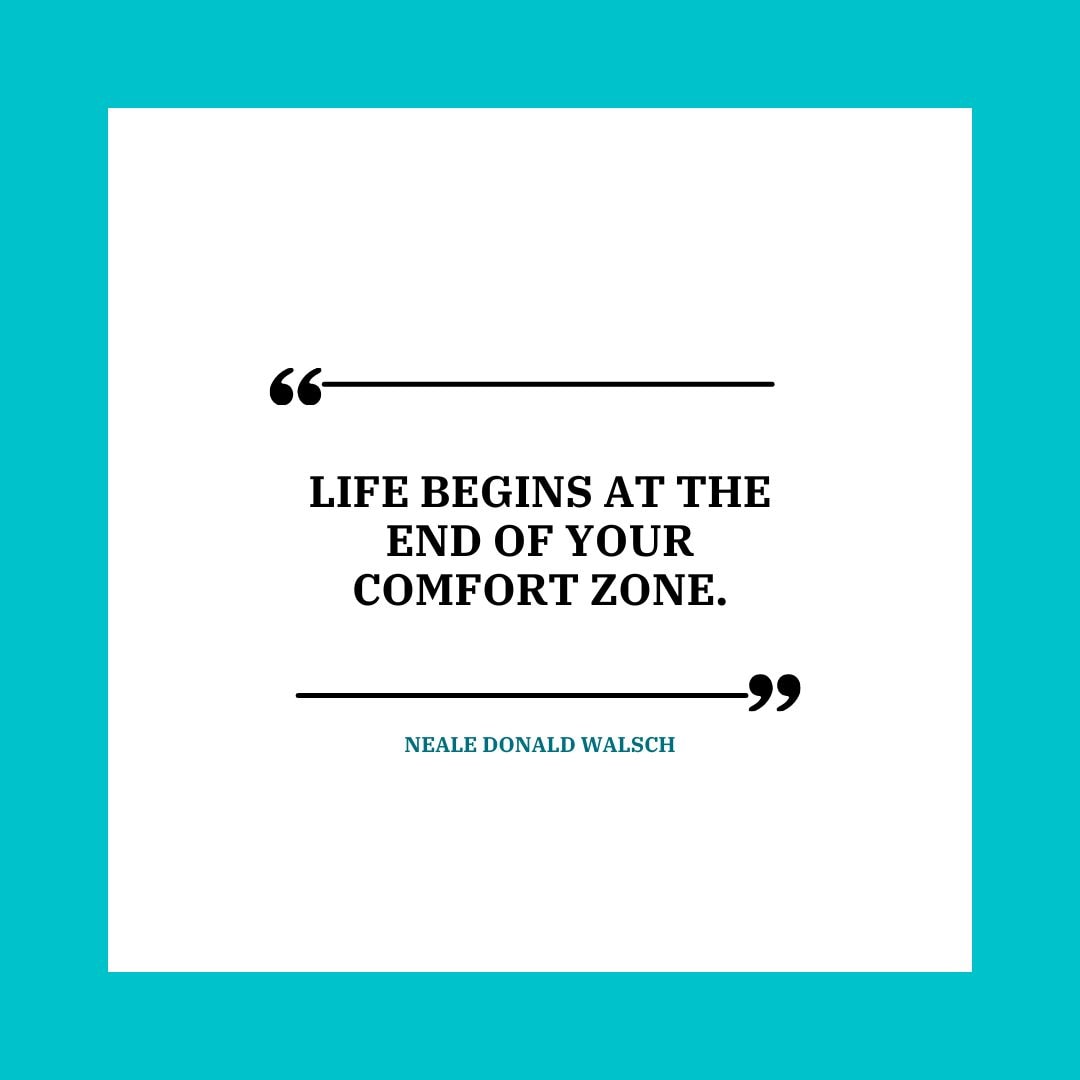
Stepping out of your comfort zone is essentially stepping into this chaos. It’s a journey into the unknown where you must confront your fears, uncertainties, and the parts of yourself that you haven’t yet fully understood. But it’s in this unknown that real life begins. As Neale Donald Walsch puts it, "Life begins at the end of your comfort zone."
Overcoming Mental Barriers
If we’re not accustomed to doing challenging things, it’s easy to fall into patterns of judgment and prejudice. Thoughts like "Personal growth isn’t for me," "It’s not important right now," "This sounds ridiculous," or "I’m too tired for this" are all mind programs designed to keep us within our comfort zones. These mental barriers are like invisible walls, seemingly impossible to overcome. Many of us might face such walls in the coming weeks, especially when confronting new challenges.
Interestingly, the most challenging tasks often bring about the most significant positive change. I mention this now so that you’re prepared. When you encounter these mental barriers, observe them, understand that they are merely illusions—external constructs far removed from your true self. Some programs are deeply ingrained and require substantial willpower and determination to reprogram. Remember, your happiness is in your hands. The key is to keep trying, regardless of how many times you might think you've failed. If you stumble one day, don’t dwell on it—just get back up and try again as soon as you can.
Practical Exercise
Ask yourself: What activity would be beneficial for me, but I find myself too tired, lacking in willpower, or too lazy to do it? Now, visualize yourself doing it. This requires less mental energy and builds inner strength. Set a reminder on your phone to regularly visualize yourself performing this challenging activity. Imagine every small detail, as this will build up your inner resolve, eventually enabling you to make it a reality.
But don’t just think about it—act on it. Remember the concept of Reversed Pareto: focus on those critical tasks that will bring the most significant benefits to your life. Look at successful and self-realized individuals—they all share one trait: no matter how impossible something may seem, they never give up. They keep trying until they succeed.
If you don’t manage to do everything perfectly, it’s okay. What’s most important is that you keep trying every day. With persistence, you will achieve your goals. Trust the process, try, and never give up. This is the key to all success.
Why It’s Essential to Step Out
Growth doesn’t happen in isolation; it happens when we are exposed to new experiences and challenges. By stepping out of our comfort zone, we:
Build Resilience:
Facing new challenges teaches us how to cope with uncertainty and adversity. This resilience is crucial for navigating life’s inevitable ups and downs.
Expand Our Horizons:
New experiences broaden our perspective, exposing us to different ways of thinking and living. This expansion is essential for personal and professional growth.
Boost Confidence:
Each time we step out of our comfort zone and succeed, our confidence grows. We begin to trust ourselves more and believe in our ability to handle whatever comes our way.
Uncover Hidden Talents:
Trying new things often reveals abilities and interests we didn’t know we had. This can lead to discovering new passions and even new career paths.
Achieve Personal Growth:
Growth comes from pushing beyond what we think we can do. It’s in these moments of challenge and hardship that we learn the most about ourselves.
Practical Steps to Move Beyond Your Comfort Zone
Start Small: You don’t have to take a giant leap. Begin by making small changes in your routine—take a different route to work, try a new hobby, or engage in a conversation with someone new.
Set Clear Goals: Define what you want to achieve by stepping out of your comfort zone. Whether it’s personal growth, career advancement, or improving a specific skill, having a clear goal will motivate you to take the necessary steps.
Embrace Failure as a Learning Tool: Understand that stepping out of your comfort zone may lead to failure, and that’s okay. Failure is a part of the learning process. Each setback provides valuable lessons that contribute to your growth.
Seek Support: Surround yourself with people who encourage you to push your boundaries. Having a support system can provide the motivation and reassurance you need to keep going.
Reflect and Adjust: After stepping out of your comfort zone, take time to reflect on what you’ve learned. Consider what worked, what didn’t, and how you can apply these insights moving forward.
Embrace the Journey
Stepping beyond your comfort zone is not a one-time event; it’s a continuous journey. Each time you challenge yourself, you become more equipped to face the next challenge. The growth you experience will not only enhance your life but also inspire those around you to do the same.
Remember, comfort zones are where dreams go to die. By embracing discomfort and stepping into the unknown, you open yourself up to a world of possibilities and transform into the person you were always meant to become.

MySpiritWay Practical Spirituality. We can help you; create a supportive lifestyle,accelerate spiritual and personal growth, reduce life suffering, raise your consciousness, and achieve life satisfaction across all fields.
Simplified Practical Spirituality
Everything you need to know about practical spirituality and the evolution of consciousness.
Get Access here
MySpiritWay © www.myspiritway.org