#4 - Mind Like Super Computer
Introduction
Imagine your mind as a powerful supercomputer, constantly running various "programs" that dictate how you think, feel, and behave. These mind programs are deeply embedded patterns that automatically guide your responses to specific triggers or circumstances. Unless consciously updated, these programs will continue to operate, leading to repetitive thoughts and behaviors.
The Roots of Mind Programs
Mind programs begin forming from the moment of conception, influenced by genetics, early development, and the environment you're born into. The people you interact with and the experiences you have further shape who you are today. Your current state—how satisfied, successful, and content you are or the opposite—is greatly the result of these influences and the patterns created.
Early life experiences set off a chain reaction, coding initial patterns that influence future decisions. However, as you become more aware, you gain the ability to take control and reprogram these patterns. Actively becoming the person who can find themselves more aligned with the perfect moment and perfect time, a reality where higher qualities, happiness, connection, and integrity tend to take place much more often.
Understanding Mind Programs
Each mind program functions like a magnet, attracting energies that resonate with its core nature. Some programs are positive, and rooted in high vibrating energies like Love, Happiness, and Peace of Mind. Others are negatively rooted in low vibrating energies, driven by Fear, Hatred, and Scarcity.
Every one carries a unique blend of these programs, which exist along a spectrum of vibrations or polarities. Programs, whether at one end of the spectrum or the other, shape your thoughts and behaviors in profound ways.
Common negative programs might express themselves in thoughts like:
"I don't deserve to be loved," leading to self-sabotaging behaviors in relationships.
"Life is unfair," fostering a victim mentality where one constantly feels wronged by circumstances.
"I'm not good enough," resulting in a lack of self-confidence and hesitation to pursue opportunities.
"I'll never be successful," which can cause avoidance of risks and a belief that failure is inevitable.
"People always let me down," leading to trust issues and difficulty in forming close relationships.
👉Can you think of any more negative programs?
On the other hand, common positive programs might include:
"I am worthy of love," which fosters healthy relationships and self-love.
"Life is full of opportunities," encouraging optimism and the pursuit of new experiences.
"I am capable and strong," building self-confidence and resilience to face challenges.
"Success is within my reach," driving motivation and perseverance to achieve goals.
"People are kind and supportive," attracting positive, supportive relationships.
👉Can you think of any more positive programs?
These programs carry code filled with specific emotions, feelings, stream of thoughts, and actions, creating a feedback loop that continuously reinforces their influence, whether positively or negatively.
The concept of "like attracts like" plays a crucial role here. Once you identify these programs in your life, you can start to predict the trajectory they will set for your future, especially if they are particularly strong or dominant. This understanding allows you to consciously decide whether to continue on the current path or to take steps to reprogram these patterns, steering your life in a more desirable direction.
The Power of Energetic Resonance
Let's expand deeper into the concept of "like attracts like" which is deeply rooted in the principle called "energetic resonance", a powerful idea that suggests the energy you emit—through your thoughts, emotions, and behaviors—naturally attracts similar energies. When you consistently operate from a particular emotional state, whether it’s fear, anger, or love, you begin to draw in situations, people, and experiences that resonate with that same energy.
For instance, if someone frequently experiences thoughts of scarcity or fears of not having enough, they may find themselves repeatedly struggling with financial challenges or encountering situations where resources seem limited. This happens because their mindset and emotional state create an energetic frequency that attracts similar experiences, perpetuating a cycle of scarcity.
Conversely, someone who consciously cultivates a mindset of abundance and gratitude is more likely to notice opportunities, build supportive relationships, and experience overall positivity in their life. This doesn’t mean they won’t face challenges, especially at the begining of your journey but their predominant energy will attract more of the positive outcomes they focus on, reinforcing their optimistic outlook.
On the more logical side of understanding - it’s about how our thoughts and emotions influence our behavior, which in turn shapes the way others respond to us and the opportunities we encounter. The idea that "like attracts like" is something we all experience, often without realizing it.
Think about a time when you were in a bad mood—perhaps you woke up feeling stressed or anxious. How did that day unfold? Did you notice that more things seemed to go wrong, or that people around you seemed less friendly? This is a perfect example of how your emotional state can set the tone for your experiences.
When you're feeling negative, your thoughts tend to focus on what's going wrong, and your actions might reflect that negativity. For instance, if you're worried about failing at something, you might not put in your best effort because you're already convinced it won't work out. This can increase the chances that things will go poorly, confirming your fears and creating a cycle that feeds itself.
On the flip side, consider a day when you felt confident and happy. Did you notice that everything seemed to fall into place more easily, or that people responded to you in a more positive way? When you're in a good mood, you're more likely to take on challenges, be friendly, and see the positive side of things, which attracts more of the same into your life. Simple right?
Identifying and Transforming Patterns
When following the practical spiritual path, it’s essential to transform negative and destructive mind programs to align ourselves with a more desirable reality. The first step in this transformation is recognizing these programs.
What’s particularly interesting is that by identifying a pattern, we create the opportunity to distance ourselves from it—distinguishing between the "it" (the pattern) and the "I" (our true self). This separation allows us to observe the pattern from the standpoint of a pure, objective mind. The distance we create helps us stop falsely identifying with the program, enabling us to see it for what it truly is—a temporary and changeable construct, rather than an intrinsic part of who we are.
With this perspective, we gain the freedom to choose: we can either identify with these programs and continue to experience their effects, or we can detach from them, significantly reducing their influence over our lives. This process of detachment and observation becomes even more profound and accessible as we deepen our spiritual practices.
Let's examine a profound quote that can help us understand how patterns can be identified on various levels. It’s important to note that not every mind program operates across all levels, but the more complex ones often do.
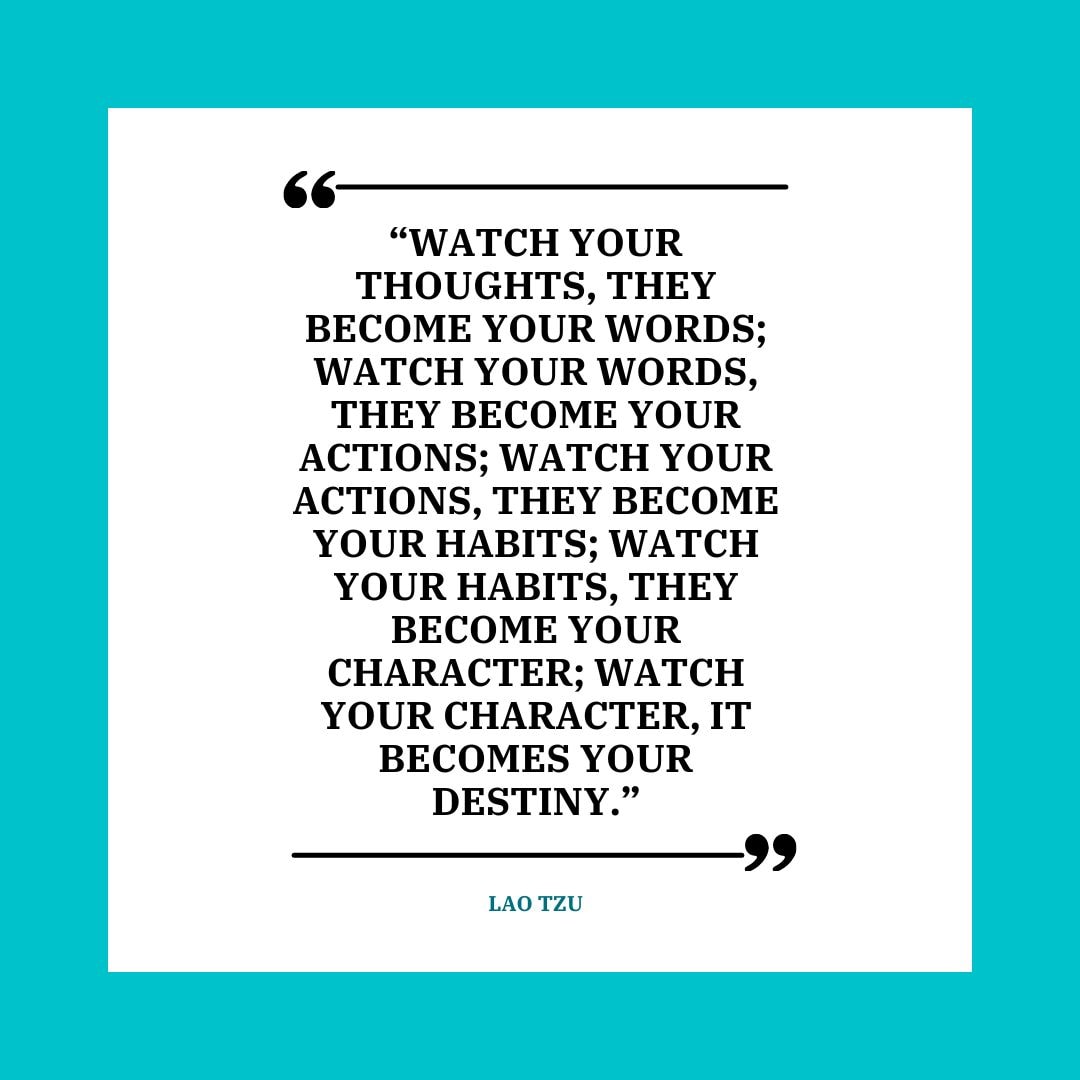
As Lao Tzu wisely said:
“Watch your thoughts, they become your words; Watch your words, they become your actions; Watch your actions, they become your habits; Watch your habits, they become your character; Watch your character, it becomes your destiny.”
This quote highlights how our thoughts, words, actions, habits, and character are interconnected, forming patterns that shape our lives. By understanding these connections, we can better recognize and transform negative mind programs at different levels.
Below is an example to help you identify mind programs across different levels:
Thoughts:
Example: You frequently think, "I’m not good enough," whenever you’re faced with a challenge. This thought might stem from a deep-seated belief that you’re inadequate or unworthy of success.
Words:
Example: After thinking, "I’m not good enough," you might say things like, "I’ll probably fail at this," or "I don’t think I can do it," reinforcing the belief in your inadequacy.
Actions:
Example: These thoughts and words lead you to avoid taking on new challenges or to give up easily when faced with difficulties, reinforcing a cycle of self-doubt and failure.
Habits:
Example: Over time, consistently avoiding challenges becomes a habit. This habit of avoiding risks prevents you from growing or achieving your potential, keeping you in a state of stagnation.
Character:
Example: As this habit solidifies, it shapes your character, making you more risk-averse and less resilient. You may develop a character that is overly cautious, fearful of failure, and lacking in confidence.
Recognizing patterns at the levels of thoughts, words, actions, habits, and character helps us understand how deeply ingrained these programs can be and how they manifest in different aspects of our lives.
Become Aware of Negative Mind Programs - Exercise
Understanding and transforming negative mind programs is a crucial step in aligning your life with your highest aspirations. This exercise is designed to help you identify and address these ingrained patterns by reflecting on your daily experiences and emotions. By regularly practicing this, you'll gain greater awareness of how these programs influence your thoughts, words, actions, habits, and overall character and possibly even dissolve some of them already.
Let’s explore how you can begin this transformative process:
1. Set Aside Time for Reflection:
Dedicate time this week to identifying negative patterns in your life. Begin by regularly scanning your day—you may discover mind programs in the process. The best time for this reflection is in the evening, just before going to sleep, as you review your day.
2. Use Guiding Questions:
Utilize the following questions to guide your thoughts and help recognize mind programs on multiple levels. You might also experiment by creating your own questions to make the practice more personal. Consider how these patterns may manifest differently across various aspects of your life.
3. Identify Patterns:
Observe and identify any negative mind patterns that emerge during your reflection. Experiment with recognizing how these patterns might impact different areas of your life, using the insights from Lao Tzu’s quote to deepen your understanding.
4. Connect to the Underlying Emotional Charge:
Once you’ve identified a pattern, connect it to the underlying emotional charge that fuels it. Remember that the same energetic charge will likely continue to attract more of what it represents.
5. Reflect on Long-Term Impact:
Consider the potential long-term consequences of continuing with this pattern. Reflect on how it could shape your future if left unaddressed.
6. Think of a Ways to Reprogram the Pattern:
If you can think of ways to reprogram the identified pattern, write them down. Be proactive, and search for ways that can help you online. In the next chapter, you will find the step-by-step process that can help you.
7. Gradual Implementation:
This exercise can be done gradually—add to your list as you notice more patterns. Revisit this exercise periodically to reflect on and document your findings in a notebook.
Questions to Help Identify and Transform Destructive Programs
Thoughts:
What specific thoughts often lead me to feel or act destructively?
Am I frequently dwelling on negative outcomes or fears?
What positive thoughts can I cultivate to replace these negative ones?
Words:
Do I notice myself using harmful or self-defeating language?
How often do I speak negatively about myself or others?
What affirmations or positive statements can I use to replace negative language?
Actions:
How do I typically respond to challenges or setbacks—are these responses harmful or helpful?
What daily actions might be contributing to my overall dissatisfaction or stress?
What new actions can I take to support a more positive outlook?
Habits:
What recurring behaviors are leading to negative outcomes?
How do my current habits shape my daily life and long-term goals?
What small changes can I make to start building better habits?
Character:
What long-term consequences might arise if I continue following these destructive patterns?
How do my thoughts, words, and actions influence my character?
What qualities do I want to embody, and how can I align my thoughts, words, and actions to reflect those qualities?
Emotions:
What emotion or belief lies at the core of this destructive program?
How can I address these emotions in a healthy and constructive way?
Mindset:
What steps can I take to shift from these destructive patterns to more constructive and positive ones?
How can I cultivate self-compassion and patience as I work to transform these destructive programs?
How can I celebrate small victories along the way to reinforce positive changes?
Time for Transformation - Exercise
Now that you’ve identified destructive mind programs, it’s time to put change into action. Consistency and conscious effort are key to transforming these patterns. Below you can find suggested steps that can help you.
Here’s how you can start the process of transformation:
1. Observe and Create Space:
When you notice a negative mind program, begin by observing it. Taking a deep breath can help you slow down, creating the space needed to detach from the program. This initial step is crucial as it allows you to step back from the automatic response and prepare for conscious change.
2. Counter with Positive Affirmations:
With this space created, consciously choose an opposite, positive thought or action to counter the negative program. For example, if you find yourself thinking, "I’m not good enough," immediately replace it with, "I am capable and worthy." This intentional shift interrupts the negative cycle and begins to rewire your thought patterns.
3. Mindful Awareness and Redirection:
As you become more aware of your thoughts and feelings, make a habit of intentionally redirecting your focus from negative to positive. Each time you catch yourself in a negative loop, pause, observe, and redirect. Even small adjustments in your mindset can lead to significantly better experiences and outcomes. Regularly focusing on what you want to attract—such as happiness, success, or love—reinforces the likelihood of these positive results manifesting in your life.
4. Conscious Repetition and Reprogramming:
Deeply ingrained programs are best changed through conscious repetition. Just as these patterns were created through repeated thoughts and behaviors, they can be overwritten by consistently practicing new, positive patterns. For example, if you’ve identified a habit of procrastination, make it a point to tackle small tasks immediately. Over time, this new habit will replace the old one, leading to greater productivity and satisfaction.
5. Reflect and Update Regularly:
Continuously reflect on and update your list of mind programs. As you grow and evolve, new patterns may emerge, and existing ones may change. By staying vigilant and reflective, you’ll become more aware of when you’re under the influence of these programs. This awareness increases your chances of responding differently and breaking free from old, destructive patterns.
By following these steps and integrating them into your daily life, you’ll gradually reprogram your mind, replacing negative patterns with positive, empowering ones. Regular reflection and repetition will help solidify these changes, aligning your life with your highest aspirations.
Best of Luck!

MySpiritWay Practical Spirituality. We can help you; create a supportive lifestyle,accelerate spiritual and personal growth, reduce life suffering, raise your consciousness, and achieve life satisfaction across all fields.
Simplified Practical Spirituality
Everything you need to know about practical spirituality and the evolution of consciousness.
Get Access here
MySpiritWay © www.myspiritway.org