#10 - Kaizen Philosophy
Introduction
Achieving your dreams often requires more than just setting goals; it demands the elimination of obstacles that hinder the development of healthy habits. This is where the Kaizen philosophy can play a crucial role. By applying the Kaizen method, you can start and refine habits, steadily working toward your larger goals.
Kaizen, derived from the Japanese words "kai" (change) and "zen" (good), is a philosophy that promotes continuous, incremental improvements. This approach sustains high levels of efficiency and can help you enhance your personal and professional life by eliminating waste and establishing beneficial routines.
There’s always room for small improvements. The key is to challenge the status quo, embrace the process, and commit to practicing daily. If you've already seen benefits from an intuitive approach to self-improvement, applying Kaizen can further enhance the techniques and habits you’re developing throughout this course.
Remember, whatever new habit you decide to cultivate shouldn’t be a one-time endeavor. To make a real difference, it needs to be repeated regularly. Ultimately, 80% of your progress will come from your consistent, honest efforts, with the remaining 20% coming from external guidance. Kaizen is about sustaining that motivation and continually refining your practice.
What is Kazien?
Kaizen is a methodology aimed at improving productivity, effectiveness, safety, and reducing waste. It is widely used in various industries to enhance operational efficiency, but its principles are equally applicable on a personal level.
The idea is simple: when you engage in positive actions—like getting enough sleep or exercising regularly—your brain rewards you with a sense of well-being and joy. These rewards are only fully realized when actions are performed in balance—neither too little nor too much. By repeating positive actions, they become second nature, leading to a more fulfilling life surrounded by positivity.
Patience is a cornerstone of the Kaizen philosophy. Achieving meaningful change takes time and persistence. Just as you can’t build a dream body by going to the gym once a month, you can’t expect to see significant improvements without regular, sustained effort. Think of your habits as seeds that need time, care, and consistency to grow and blossom.
Kaizen isn’t just about making small changes; it’s about committing to a process of ongoing improvement. Whether you’re working to develop a new habit or refine an existing one, the Kaizen approach helps integrate these changes into your daily routine, making them more sustainable over the long term.
How to Apply Kaizen in Your Life
Achieving your goals—unless they involve winning the lottery—requires time and continuous improvement. Begin by reminding yourself of your goals. Reflect on the lessons you’ve learned so far and how they align with what you want to achieve.
The Kaizen method encourages breaking down larger goals into smaller, manageable tasks. For instance, if your goal is to build your ideal body, start with a simple, attainable task like doing five push-ups each day. While this might seem minimal, it’s about setting a foundation and gradually increasing the challenge as your strength and endurance improve. After a week of consistent effort, reassess and adjust your routine to push a little further.
Procrastination often occurs when we focus too much on the end goal and overlook the steps needed to get there. The Kaizen approach teaches us not to overburden ourselves, as this can lead to burnout. Instead, focus on taking small, consistent steps. You may stumble along the way, but the key is to keep moving forward without lengthy pauses that can undo your progress.
Remember the exercise where you imagined yourself completing a task? Visualization can be your minimum effort—at least mentally rehearsing the actions you need to take, which can make it easier to follow through in reality.
As the saying goes, “Until you try, give yourself a chance to win. If you stop, then you lose.” Tracking your progress in a habit tracker can help you stay on course and celebrate your small victories along the way.
Benefits of Kaizen Approach
The Kaizen approach offers several tangible benefits:
Reduced Waste: By using your skills and resources more efficiently, you can eliminate unnecessary effort. For example, if you can exercise at home, you save time and energy compared to driving to a gym.
Increased Satisfaction: Continuous improvement has a direct impact on how tasks are completed, leading to greater personal fulfillment.
Improved Commitment: Regularly surpassing your own records fosters a sense of achievement, keeping you motivated and engaged.
Sustained Interest: Satisfaction with your progress reduces the likelihood of losing interest, helping you maintain long-term dedication.
Enhanced Problem-Solving: Approaching challenges with a mindset focused on solutions allows for continuous improvement and innovation.
Common Forms of Waste in Everyday Life
Understanding the different types of waste can help you identify and eliminate inefficiencies in your daily routine:
Movement: Avoid unnecessary steps or tasks that don’t add value. Question why you’re doing something if it doesn’t contribute to your goals.
Time: Minimize idle time where no value is being added. Time wasted is a significant obstacle to achieving your goals.
Defects: Strive for quality in your work to avoid redoing tasks. It’s more efficient to do something right the first time than to correct mistakes later.
Variations: Use standardized approaches where possible to avoid unnecessary customization. Improve only when it adds value, not for the sake of change.
Overworking: Balance is crucial. Overextending yourself can lead to burnout, making it harder to sustain progress over time.
Exercise
Now that you understand the Kaizen philosophy, it’s time to apply it to your daily routine. Here’s a simple exercise to get you started:
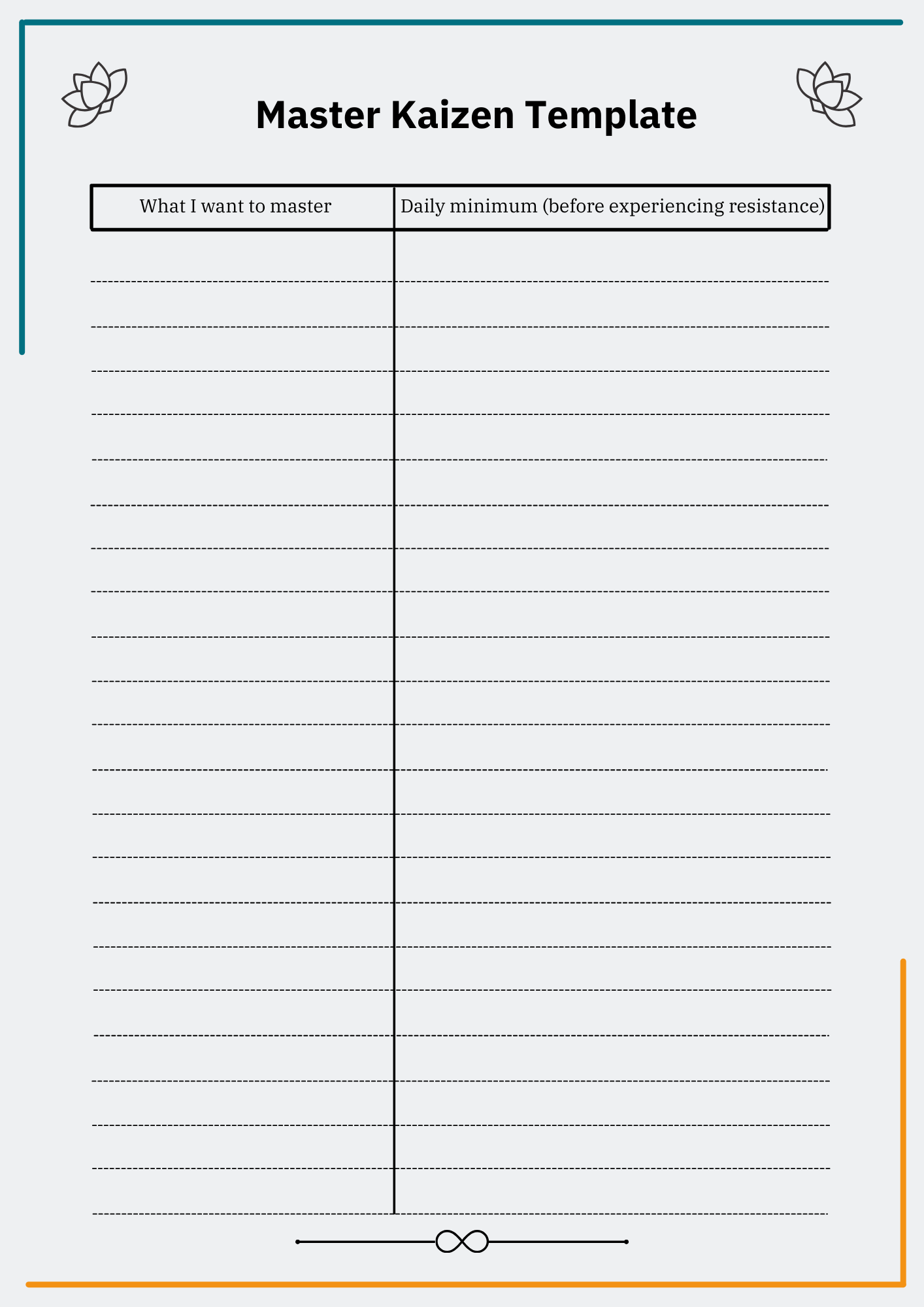
Create a To-Do List:
Identify activities you want to master. If you’ve done this before, revisit and update the list with the Kaizen approach in mind. Break larger tasks into smaller, manageable ones.
Start Small:
Set daily minimums that don’t trigger resistance. For example, if you struggle with consistency, set a goal that feels achievable, like five minutes of meditation or a short walk.
Track Progress:
Use a habit tracker to monitor your daily activities and improvements.
Schedule Wisely:
Plan your activities with realistic time allocations. Set reminders to keep yourself accountable.
Test and Adjust: Regularly assess your progress. As you build strength and confidence, gradually increase the difficulty of your tasks.
By integrating these steps into your daily life, you’ll develop strong, healthy habits that propel you toward your goals.
Summary
The Kaizen philosophy teaches us to start small and build gradually through regular practice. Continuous improvement, without long breaks, leads to sustainable habits and eliminates waste that can cause distractions or demotivation. By applying Kaizen, you can transform your approach to personal growth, making consistent progress toward a more fulfilled life.

MySpiritWay Practical Spirituality. We can help you; create a supportive lifestyle,accelerate spiritual and personal growth, reduce life suffering, raise your consciousness, and achieve life satisfaction across all fields.
Simplified Practical Spirituality
Everything you need to know about practical spirituality and the evolution of consciousness.
Get Access here
MySpiritWay © www.myspiritway.org