#9 - Visual Dream Board and Bucket List
Introduction
You’ve likely heard the famous quote, "Where focus goes, energy flows." This raises an important question: If we don't have specific goals, where does our energy go? While some people have clear, well-defined dreams, many others struggle to identify their aspirations. In this article, we will help you discover what truly fascinates you and refine your vision.
Once you clarify your vision, the next step is to transform those dreams into actionable goals. This involves breaking your goals down into small, manageable steps that you can incorporate into your daily routine. By doing so, each day will bring you closer to turning your dreams into reality.
We’ll also focus on sharpening your ability to visualize your goals. Visualization is a powerful tool that will keep you motivated and aligned with your purpose.
Through consistent effort, repetition, and continual improvement, you’ll begin to see your dreams take shape.
Law of Attraction
The Law of Attraction is a concept widely discussed in both spiritual and practical contexts. At its core, it’s about the idea that like attracts like—meaning the energy you emit, whether positive or negative, directly influences what you attract into your life. As Buddha said, "What you think, you become. What you feel, you attract. What you imagine, you create." This encapsulates the essence of how our inner world shapes our outer experiences.
Practically speaking, when you focus on positive thoughts and emotions, you naturally feel more motivated and energized. This state of mind leads to proactive behaviors, which then open doors to new opportunities and positive outcomes. Conversely, dwelling on negativity can spiral into a cycle of inaction, missed opportunities, and further negativity.
Short Exercise:
Close your eyes and relax. You can take a few deep long breaths. Now, bring into your mind a truly positive memory. As you immerse yourself in that memory, notice how your mood and energy naturally lift.
Next, shift your focus to an unpleasant experience. Observe how your energy drains.
This exercise helps you experience the contrast firsthand, highlighting the power of your focus and its significant impact on your overall levels of energy. With higher energy levels, you increase your capacity for productivity, resilience, and positive interactions, while lower energy levels can hinder your effectiveness and overall well-being.
Another powerful aspect of the Law of Attraction is the idea that "You attract what you are, not what you want. If you want great, then be great." This means that aligning your thoughts, actions, and emotions with the life you desire is crucial. It’s not enough to simply wish for better things; you must embody the qualities that will naturally draw those things into your life. By becoming the person who aligns with your goals and dreams, you set in motion the forces that will help bring them to fruition.
Ultimately, the Law of Attraction is about the conscious cultivation of a mindset that fosters growth and positivity. As you nurture this mindset, you’ll find that your life begins to reflect the very qualities you’ve been focusing on, turning your thoughts into reality.
The Missing Part
After watching the famous movie "The Law of Attraction," I felt inspired but also sensed that something was missing. Despite thinking positively, I noticed little change in my life. Over time, I realized the crucial missing element: action. Positive thinking is powerful, but it must be paired with consistent, purposeful action to truly manifest the life you desire.
Everyday Action:
The Law of Attraction isn’t just about thinking positively—it's about taking concrete steps every day that align with your goals. Building strong, healthy habits is essential to empower this law. Consider how your day unfolds when you start with positive energy versus when you begin with negativity. Your energy directly influences your actions, and your actions shape your reality.
Embrace Imperfection:
It's important to understand that manifestation doesn’t always happen exactly as we envision. Our perspective is shaped by our past experiences, and sometimes what we receive may differ from what we imagined. The key is to remain open and grateful for what comes your way, even if it’s not an exact match to your desires. The universe often delivers what we need, rather than what we think we want. Adopting an attitude of acceptance and adaptability allows you to see the hidden gifts in every situation.
Trust the Timing:
Another important realization is that manifestation operates on its own timeline. Setting a strict deadline for your dreams can lead to disappointment if things don’t happen as planned. Remember, the further you are from your goals, the more internal shifts and growth are required. Instead of focusing solely on the outcome, break down your goals into smaller, manageable steps that you can work toward every day. This approach ensures steady progress and keeps you moving closer to your dreams.
Focus and Clarity:
In our fast-paced world, it’s easy to become overwhelmed by too many thoughts and projects, leading to scattered energy. The phrase "spread too thin" captures this perfectly. To harness the power of the Law of Attraction, it’s crucial to minimize distractions and concentrate on one goal at a time. Meditation, mindfulness, and focused concentration are powerful tools to help you clear the mental clutter and direct your energy toward what truly matters.
Dream Big, but Stay Grounded:
Bigger dreams often require more time, effort, and transformation. While it’s important to dream big, it’s equally important to recognize that achieving these dreams is a journey. The path to your goals might be long, but with persistence and a focus on daily improvement, everything is possible. Understand that the distance between where you are now and where you want to be is filled with opportunities for growth, learning, and self-discovery.
In essence, while positive thinking sets the stage, it is your actions, patience, and focus that bring your dreams to life. Manifestation is not just about visualizing success; it’s about becoming the person who naturally attracts and creates that success through consistent effort and dedication.
Make Your Bucket List
When we talk about a bucket list, we often refer to a "list of things to do before you die." But what if we shifted our focus away from the concept of dying and instead focused on living? How would this change the way we approach our dreams and goals? The key to making your dreams come true is to first clearly define them. For some people, this may seem straightforward—they know what they want. But for others, it can be a challenge to articulate their deepest desires. This is where the process of reflection comes in, asking yourself the fundamental question: What do I really want?
Life is fleeting, and time passes quickly, so it’s essential to take charge of your journey. Imagine your life as a movie—you are the director, and it’s up to you to decide what the plot will be. Whether your dreams are grand or simple, the important thing is that they align with your true values and bring you genuine fulfillment.
Clarify the True Desires Behind Your Goals
When creating your bucket list, you might start with broad, materialistic goals like accumulating wealth or owning luxury items. But it’s essential to dig deeper. What do these material possessions truly represent? Often, they offer temporary satisfaction, and the pursuit of them can lead to an endless cycle of desire. This is why many people find themselves in a perpetual race after money or status.
Balance is crucial. It’s not about giving up on material goals but understanding why you want them. Are these desires masking a deeper need or insecurity? Or are they driven by passion and love? When your goals are rooted in genuine passion, they are more likely to bring lasting happiness. If something truly excites and motivates you, go after it!
How to Create Your Bucket List
To get started, write down everything that comes to mind—no matter how big or small. Over time, your list may evolve as you gain more experience and insight. Some items may become less important, while others may rise in significance. Regularly updating your list allows you to track your progress and reflect on your journey. This helps you celebrate your achievements and refine your focus.
Creating a bucket list is not just about listing goals; it’s about giving clear instructions to your subconscious mind. This clarity helps you prioritize your actions and focus your energy on what matters most. Your bucket list serves as a roadmap, guiding you toward your dreams.
Overcoming the Challenge of Creating a Bucket List
Sometimes, creating a bucket list can feel overwhelming. You might think, "I don't want anything," or "I don't know," which could indicate that you haven’t spent enough time reflecting on your desires. Take this as an opportunity to explore what you truly value and want to preserve or cultivate in your life.
When I first created my own bucket list, I was unsure of what I wanted. I made a conscious decision to embark on a journey of self-discovery, to find out who I am and who I am not. This process took many years, and I’m still discovering new things about myself. I started by looking up "100 Bucket List Ideas" online and created a long list of things I wanted to do. As I checked off each item, I learned more about what I didn’t want, which helped me focus on what truly mattered.
The Importance of Trying New Things
You won’t know what you truly want until you try different things. Don’t assume something isn’t for you before giving it a chance. If a goal requires specific skills, don’t make excuses—ask yourself how you can learn those skills. With so many resources available online, you can find guidance on almost anything. Knowing what you want is half the battle; the next step is to write it down and create a serious plan for achieving it.
Take the time to contemplate, get to know yourself better, ask questions, learn from your experiences, make mistakes, and enjoy life to the fullest.Below, I’ve included a simple form that you can print as many times as you need. There’s something magical about creating things by hand, so I encourage you to write your bucket list on paper rather than typing it out. Research shows that handwriting has advantages over typing, helping you create a stronger connection with your goals.

Make a Dream Board
Creating a dream board is the next step in bringing your dreams to life. While your bucket list helped you organize and identify your goals, a dream board serves as a visual representation of these aspirations. It taps into your creativity and engages the artistic side of your mind, making the process of pursuing your dreams more tangible and motivating. Repetition is a key to success, and by creating a dream board, you reinforce your commitment to your goals through the power of visualization.
How to Make a Dream Board:
Set the Mood:
Start by doing something that puts you in a positive and relaxed state of mind. Whether it’s taking a walk in nature, enjoying a favorite meal, or watching an inspirational video, the goal is to elevate your emotions. Positive emotions will infuse your dream board with energy and help create strong, positive associations with your goals.
Gather Your Materials:
You can use a pinboard, large paper, or any other format that appeals to you. This is your personal project, so choose a medium that resonates with you. Collect magazines, print out images, and gather anything that visually represents your dreams and aspirations. Remember, the subconscious mind responds strongly to images, so choose visuals that inspire and motivate you.
Organize and Prioritize:
Once you have your materials, start arranging them on your board. Use a red thread or marker to highlight the most important goal—the one that stands out above the rest. This will help you maintain focus on your top priority. Use orange for the second most important goal and yellow for the third. This color-coding system will help you visually prioritize your dreams.
Add Motivational Elements:
If you feel inspired, include quotes, affirmations, or symbols that resonate with your goals. These elements can provide additional motivation and keep your spirits high as you work toward your dreams. Think of your dream board as a source of daily inspiration—a visual reminder of what you’re striving for.
Combine with Your Bucket List:
If you’ve already created a bucket list, consider integrating it with your dream board. The two tools complement each other, with the bucket list providing structure and the dream board adding a visual and emotional dimension to your goals. If you don’t have many dreams or goals yet, that’s perfectly okay. Revisit exercises like The Wheel of Life to identify areas for growth and set goals to improve those aspects of your life.
Visualize Daily:
Your dream board is not just a one-time project; it’s a daily practice. Place your dream board in a space where you’ll see it every day, such as near your bed or workspace. Spend a few moments each day focusing on the images and words, allowing yourself to feel the emotions associated with achieving those dreams. Visualization has been proven to help align your actions with your intentions, making it a powerful tool in manifesting your desires.
Update and Evolve:
As you achieve your goals or as your dreams evolve, update your dream board. This keeps the board relevant and aligned with your current aspirations. Don’t hesitate to remove or replace images and quotes that no longer resonate with you. Your dream board should grow and change just as you do, reflecting your personal journey and progress.
Engage All Senses:
Enhance the power of your dream board by engaging all your senses. Add textures, scents, or even sounds that evoke the feelings associated with your goals. For example, if one of your dreams is to travel to a tropical destination, include a small sample of sand or a seashell on your board, or play ocean sounds while you visualize. Engaging multiple senses can deepen your connection to your dreams and make the visualization process more vivid and effective.
Make Your Dream Board a Regular Practice
Your dream board isn’t just a one-time project; it’s a living tool that should evolve as you grow. Place it somewhere you’ll see it every day, so it becomes a constant reminder of your aspirations. This daily interaction will help reinforce your focus and keep you motivated. Remember, visualization is a powerful skill that can significantly enhance your ability to achieve your goals. By consistently engaging with your dream board, you create a strong mental connection to your dreams, making them more achievable.
Creating a dream board is about more than just crafting a visual display; it’s about connecting deeply with your desires and setting a clear intention to manifest them. As you work on your dream board, you’ll find that the process itself can be as rewarding as the outcomes it helps you achieve. This practice fosters a mindset of possibility and abundance, helping you to align your daily actions with your deepest aspirations.
Visualisation
Visualization is an incredibly powerful, yet often underestimated skill that can transform the way you approach your goals and aspirations. Mastering the art of visualization allows you to forge a deeper connection with your mind, enabling you to harness the full potential of your subconscious. This skill is not just a tool for daydreaming; it is a crucial technique that can be applied in your everyday life and in more advanced exercises as you progress on your journey.
When you visualize, you activate the creative powers of your subconscious mind, which then begins to work on finding solutions and pathways to achieve your goals. This process can lead to new levels of motivation, as you start to notice yourself naturally taking actions that align with your vision—actions you might have otherwise avoided. Visualization helps bridge the gap between where you are and where you want to be, making your goals feel more attainable and within reach.
To maximize the benefits of visualization, it’s important to keep your bucket list and dream board in a place where you can see them every day. Regularly visualizing your dreams and goals will reinforce your commitment to them, gradually building a stronger drive to achieve them. This daily practice not only keeps your goals at the forefront of your mind but also cultivates a mindset of possibility and determination.
Moreover, visualization has a magnetic quality—it attracts the people, resources, and opportunities you need to bring your goals to fruition. This happens because the brain, through consistent visualization, starts to perceive your desired future as a reality. On a neurological level, your brain creates pathways and connections that align your thoughts with your actions, helping to manifest your visualized future into your actual experience.
By visualizing your goals regularly, you’re essentially training your brain to see and believe in the possibility of your success. This mental rehearsal conditions your mind to expect positive outcomes, making you more receptive to opportunities and more resilient in the face of challenges. Over time, what you consistently visualize begins to materialize, as your thoughts, emotions, and actions all align to create the life you’ve envisioned.
Incorporating visualization into your daily routine is not just about imagining your goals; it’s about feeling the emotions associated with achieving them, engaging your senses, and immersing yourself in the experience. The more vividly you can picture your desired outcomes, the more effective your visualization will be in guiding you toward your dreams.
Why Visualisation Works?
Visualization works because the brain doesn’t easily distinguish between real and imagined experiences. This phenomenon is supported by scientific research, which shows that mental imagery can lead to physical changes in the brain and body.
The Science Behind Visualization
When you vividly imagine performing an action, the same brain regions are activated as when you actually perform that action. This is due to the brain's "mirror neuron" system, which is involved in both the execution and observation of actions. For example, if you imagine yourself practicing a musical instrument or performing an athletic move, your brain's motor cortex (which controls movement) becomes active in the same way it would if you were actually doing the task. This neural activity strengthens the brain's neural pathways, reinforcing the mental practice almost as if you were physically performing the task.
Practical Examples and Research
One famous example involves athletes who use visualization to enhance their performance. Studies have shown that athletes who combine physical practice with visualization perform better than those who rely solely on physical training. For instance, a study involving basketball players found that those who practiced free throws mentally (visualizing the shot) in addition to their physical practice improved their accuracy more than those who only practiced physically.
Additionally, research has shown that mental imagery can indeed lead to measurable physical changes. A study published in the Journal of Neurophysiology found that people who visualized exercising a muscle actually increased their muscle strength by up to 13.5%, even though they didn’t physically exercise. This effect is thought to be due to the brain’s ability to improve motor coordination and muscle control through mental practice.
How Visualization Affects the Brain
The brain processes sensory input through what’s known as 'afferent information'—data traveling toward the brain from the senses. However, the brain can also generate its own sensory experiences, called "efferent copies." These are internal simulations that allow the brain to create a mental rehearsal of an action. During visualization, your brain essentially rehearses the activity by creating these efferent copies, which helps prepare your body and mind for actual performance.
The brain’s ability to turn imagined scenarios into real emotional and physical responses is what gives visualization its power. By regularly engaging in visualization exercises, you're loading your brain with detailed images of your goals, dreams, and the emotions tied to achieving them. This mental rehearsal helps align your brain's neural pathways with your goals, making it easier for your mind and body to execute those goals in reality.
Why It Works
Visualization helps create a mental blueprint for your desired outcomes. When you visualize, your brain encodes the imagery as a real memory, which can influence your beliefs, behaviors, and performance. The brain’s plasticity, or ability to change and adapt, allows these mental images to have a profound impact on your real-life actions. By repeatedly visualizing a goal, you are effectively training your brain to be more focused, motivated, and prepared to achieve that goal.
In summary, visualization works because it taps into the brain’s natural processes for learning and memory, enhancing your ability to achieve your goals by mentally rehearsing them. This powerful tool leverages the brain's capacity to change in response to mental practice, making what you visualize more likely to become your reality.
How to Visualise:
Creating a dream board is a powerful first step, but its real potential is unlocked when you integrate visualization into your daily routine. Visualization should become a regular practice, particularly before bedtime when your mind is naturally more receptive.
Step-by-Step Visualization Process (15-30 min before sleep):
Eliminate Distractions:
Begin by turning off all potential distractions. This includes your phone, computer, or any other electronic devices. You want to create an environment free from interruptions.
Create a Calming Environment:
Find a quiet, comfortable space where you can be alone with your thoughts. Dim the lights or darken the room to help you focus inward. Consider playing soft, relaxing music or lighting beeswax candles to set a tranquil mood. The goal is to create a peaceful atmosphere that encourages deep relaxation and concentration.
Relax and Center Yourself:
Start by focusing on your natural breathing. Inhale deeply and exhale slowly, allowing yourself to fully relax with each breath. Let go of any tension or stress you might be holding onto. This process helps you to ground yourself in the present moment, making it easier to engage in visualization.
Engage with Your Dream Board:
Take a few moments to look at your dream board. Focus on each image and goal represented. Let yourself feel the emotions associated with achieving each of these dreams. The more vividly you can connect with these feelings, the more powerful your visualization will be.
Begin Visualization:
Close your eyes and sit in a comfortable position. Avoid lying down, as this may cause you to fall asleep. Imagine yourself in the scenario where you’ve achieved your most important goals. Use all your senses to create a detailed and immersive experience in your mind. Ask Yourself:Where are you? Visualize the environment around you. Is it a specific place you’ve always dreamed of? What does it look like? What are you seeing? Picture the details—colors, shapes, and surroundings. What are you doing? Imagine the actions you’re taking. Are you signing a contract, receiving an award, or celebrating with loved ones? What are you smelling? Engage your olfactory senses. Is there a particular scent associated with this place or moment? What are you hearing? Tune into the sounds around you—whether it’s the applause of an audience, the hum of nature, or soothing music. What are you tasting? If food or drink is part of your visualization, imagine the taste. What are you feeling? Focus on the emotions and physical sensations—joy, satisfaction, pride, or peace. Feel the texture of objects you might touch.
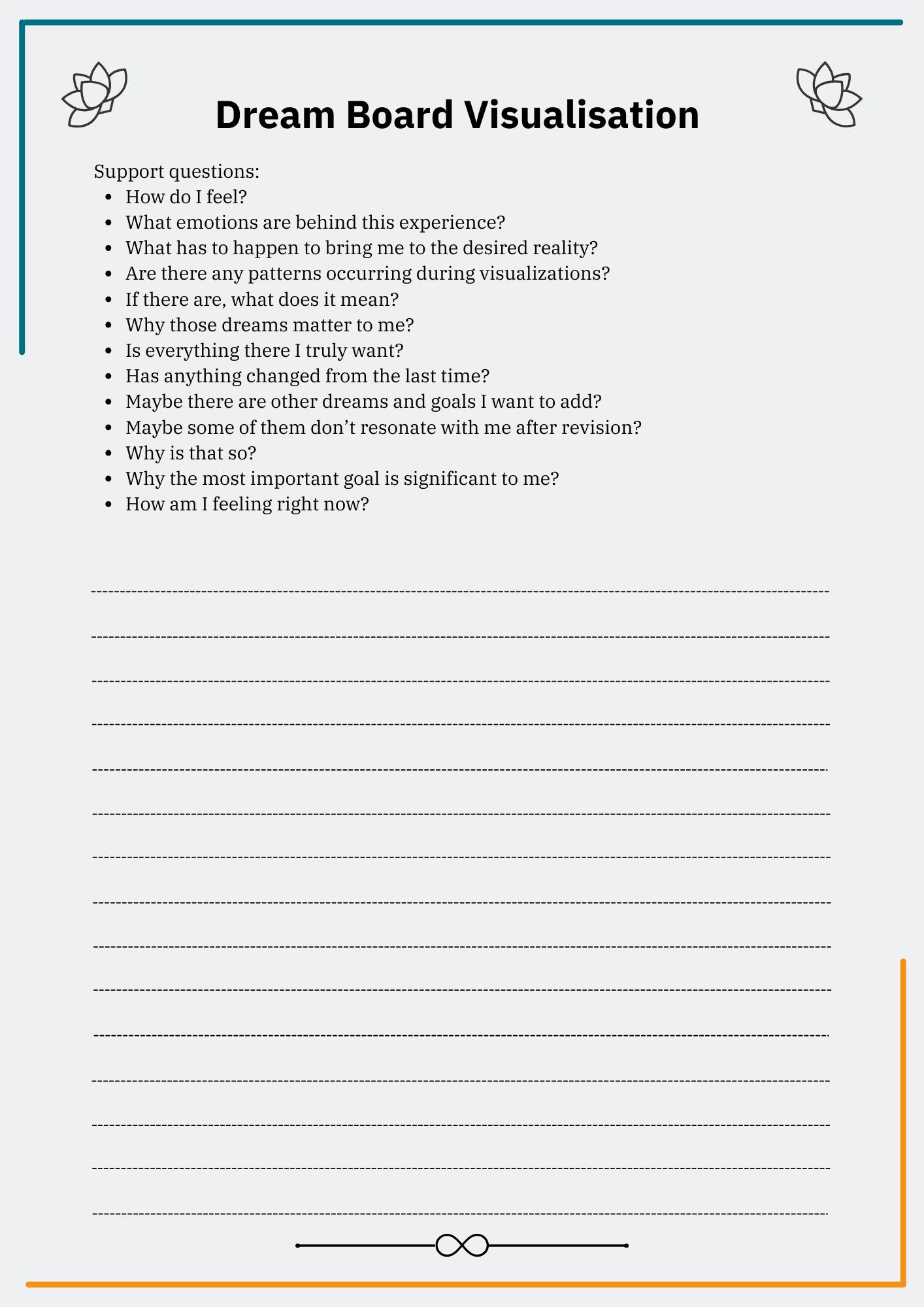
Ask Support Questions: Use supportive questions to deepen your visualization and make it more effective. For example:What obstacles did I overcome to reach this moment? How has achieving this goal changed my life? What does my future look like now that I’ve reached this milestone? Consider updating your visualization questions regularly to keep them aligned with your evolving goals and experiences.
Trust Your Inner Voice:As you visualize, listen to your inner voice or intuition. This is your subconscious guiding you toward your goals. Follow its lead, and don’t be afraid to explore new insights or ideas that emerge during this process.
Reinforce Safety and Positivity:Remember, visualization is a safe practice. Whatever you experience during this time is within your control. Embrace the process with positivity and trust that your mind is working with you to manifest your dreams.
Make Serious Plan
Now that you have a clear vision of what you truly want, it’s time to turn that vision into reality by creating a well-structured plan. A strong plan is essential for transforming dreams into tangible outcomes, and incorporating this plan into your daily routine is the key to steady progress. Remember, the bigger the goal, the more effort and focus it will require.
Break Down Your Goals into Actionable Steps
Start by taking your main goal and breaking it down into smaller, manageable tasks. These tasks should be specific, actionable, and small enough to be integrated into your everyday life. The idea is to make consistent progress by taking small steps each day, which will collectively lead you to your ultimate goal.
Be Creative and Solution-Oriented
Instead of focusing on obstacles, direct your energy toward finding creative solutions. For example, if your goal is to travel around the world but you’re limited by time or money, consider breaking your travels into shorter, more frequent trips. This approach allows you to make progress toward your goal without letting constraints hold you back. Adopt a mindset of “There is always a way,” and train your mind to seek solutions rather than excuses.
Manage Your Time Effectively
Each goal is like a project that requires time and attention. Remember, we all have the same 86,400 seconds in a day—how you use them determines your success. Prioritize your goals by identifying which ones are most important to you and focus your energy on achieving them first. As you accomplish one goal, you’ll find it easier to tackle the next, creating a positive momentum.
Build a Habit of Consistency
Avoid the temptation to postpone tasks. Procrastination can be a major barrier to success. Instead, develop the habit of taking action immediately. Start today—make a plan, begin implementing it, and continuously upgrade your strategy with new knowledge and experience. Consistency is key to building habits that support your progress and keep you on track.
Create a Flexible and Adaptive Plan
While it’s important to have a plan, it’s equally important to remain flexible. Life is unpredictable, and your plan may need adjustments along the way. Be open to adapting your approach as you gain new insights or as circumstances change. Flexibility allows you to stay resilient and continue moving forward, even when faced with unexpected challenges.
Celebrate Small Wins
As you work toward your goals, take time to celebrate the small victories along the way. Each completed task is a step closer to your ultimate objective. Recognizing these achievements will boost your motivation and reinforce the positive habits you’re developing.

MySpiritWay Practical Spirituality. We can help you; create a supportive lifestyle,accelerate spiritual and personal growth, reduce life suffering, raise your consciousness, and achieve life satisfaction across all fields.
Simplified Practical Spirituality
Everything you need to know about practical spirituality and the evolution of consciousness.
Get Access here
MySpiritWay © www.myspiritway.org